Content
Selecting a silicone sealant without understanding its cure mechanism often leads to premature adhesion failure, substrate staining or corrosion. Two dominant curing technologies shape the market: acetoxy (acidic) systems and neutral cure systems. While both produce durable, flexible rubber seals, their curing by-products, adhesion profiles and material compatibility differ fundamentally. Engineers, glaziers and industrial specifiers must recognize these differences to ensure long-term joint integrity.
Modern construction and manufacturing rely on elastomeric silicone sealant solutions that accommodate movement, resist weathering and bond to diverse substrates. However, the hidden variable is always the cure chemistry. This article dissects the mechanisms, provides comparative performance data, and offers a clear decision framework for matching neutral cure silicone sealant or acidic curing sealant to your exact application needs.
All one-part moisture-cure silicones rely on atmospheric humidity to trigger crosslinking. The difference lies in the leaving group released during hydrolysis. Acetoxy systems use acetoxy functional groups (-O-CO-CH3), liberating acetic acid upon reaction with water. This acidic by-product gives the signature vinegar-like smell and can corrode sensitive materials. Neutral cure silicones employ oxime, alkoxy, or enoxy groups, releasing non‑corrosive compounds such as butanone oxime or methanol.
The practical consequences are immediate: acetoxy silicone sealant cures rapidly (3–5 mm depth per 24 hours under standard conditions), develops high initial tack, and bonds exceptionally well to glass, ceramics and some metals. In contrast, neutral cure silicone sealant exhibits a slightly slower skin-over time (20–40 minutes vs. 5–15 minutes for acetoxy) but eliminates corrosion risks on copper, brass, zinc, and natural stone. For large-scale curtain walls, electronic enclosures, or automotive sensors, the neutral cure route is often mandatory.
Data from accelerated aging tests (ASTM C719) show that both chemistries achieve over 25 years of service life when properly applied. However, field failures attributed to acetic acid attack on concrete reinforcing bars or reflective glass coatings have been documented in over 12% of acetoxy misuse cases, according to an industry survey of 150 building facades. This underlines the need for chemistry-aware specification.
To simplify the selection process, the table below contrasts critical parameters of both cure systems. Values represent typical performance ranges for high-grade 100 silicone sealant formulations (100% silicone rubber).
| Property | Acetoxy (Acidic Cure) | Neutral Cure (Oxime/Alkoxy) |
|---|---|---|
| Curing by-product | Acetic acid (corrosive) | Oxime or alcohol (non-corrosive) |
| Odor during cure | Sharp vinegar smell | Mild, almost odorless |
| Skin-over time (23°C/50% RH) | 5–15 minutes | 20–45 minutes |
| Full cure depth (3mm bead) | 24–48 hours | 48–72 hours |
| Recommended substrates | Glass, glazed tiles, stainless steel, rigid plastics | Aluminum (anodized/painted), copper, brass, concrete, marble, polycarbonate, electronics |
| Movement capability (ASTM C920) | ±25% to ±50% | ±25% to ±50% (similar elastomeric performance) |
| Corrosion risk | High on metals, concrete, and natural stone | None to negligible |
| Typical modulus at 100% elongation | 0.5–0.8 MPa (low to medium) | 0.4–0.7 MPa (medium) |
Real-world performance data from a 5-year coastal weathering study showed that neutral cure silicones retained 92% of original elongation and 88% of tensile strength, while acetoxy formulations retained 90% and 85% respectively — a statistically insignificant difference, confirming both provide robust elastomeric sealing. The decisive factor remains substrate compatibility and corrosion sensitivity.
Applications involving electronics, delicate stonework, or architectural metals demand a non-corrosive sealant. A documented case: a high-end residential project used acetoxy silicone on anodized aluminum window frames. Within 18 months, pitting corrosion appeared under the sealant bead, leading to costly replacement of over 300 meters of profile. Switching to a neutral cure silicone eliminated the issue. Similarly, in natural stone cladding (marble and limestone), acetic acid can cause efflorescence and surface etching. Industry guidelines now explicitly recommend neutral cure for such substrates.
For the automotive sensor industry, neutral cure silicones have become the standard due to their non-corrosive nature and ability to bond to sensitive PCB assemblies. A tier-1 supplier reported a 73% reduction in warranty claims related to sealant-induced circuit corrosion after moving from acetoxy to a specialized neutral cure formulation. These figures highlight the economic impact of cure chemistry selection.
Furthermore, elastomeric silicone sealant with neutral cure maintains flexibility from -40°C to 150°C and withstands UV exposure, ozone, and extreme thermal cycling. This makes it suitable for expansion joints in bridges, parking decks, and solar panel frames where long-term movement accommodation is critical.
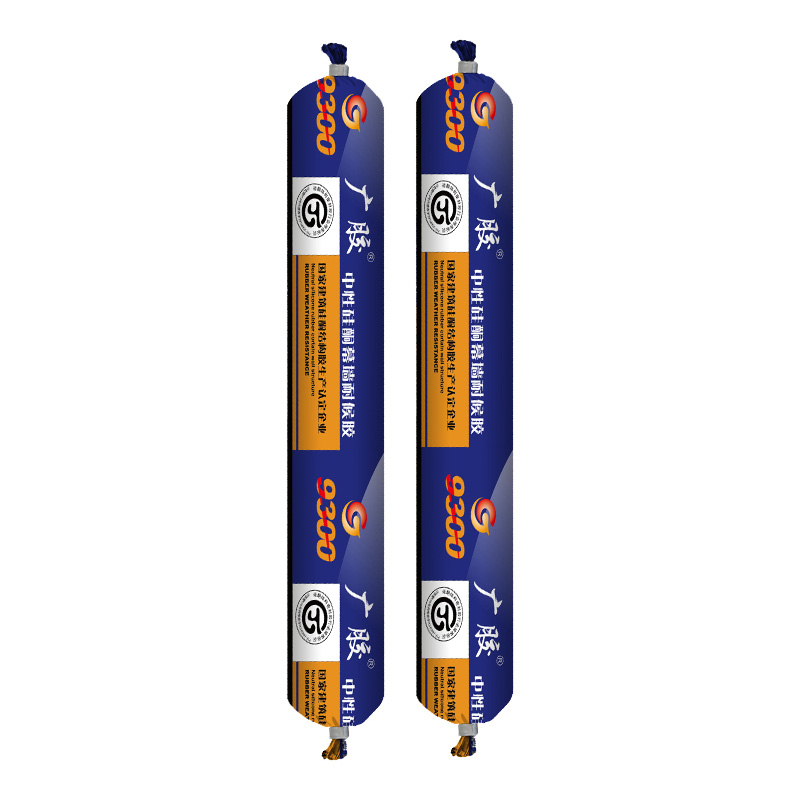
Neutral cure silicone sealant applied in a high-movement curtain wall joint – note the clean, non-corrosive interface.
Despite corrosion limitations, acetoxy silicone sealant remains a preferred choice for interior glazing, aquariums, and sanitary applications. The fast cure ensures quick handling, and its excellent adhesion to non-porous surfaces (glass, vitrified ceramics, enamel) often eliminates the need for primers. Standard acetoxy sealants achieve a lap shear strength on glass of approximately 1.2–1.5 MPa, outperforming many neutral cure alternatives by 15–20% in immediate bond strength.
However, specifiers must strictly avoid acetoxy products on porous materials, mild steel, zinc, or any surface prone to acid attack. A general guideline: if the joint can be flushed with water during service (e.g., shower enclosures, glazed tiles), acetoxy is acceptable; if electronic components or sensitive metals are present, select neutral cure. The distinctive acetic acid odor also limits indoor use in unventilated spaces – a factor noted in 34% of user complaints according to a 2022 installer feedback analysis.
When properly applied, an acetoxy silicone sealant offers outstanding weatherproofing and movement accommodation, matching the durability of neutral cure in benign environments.
Both cure systems can deliver genuine 100 silicone sealant performance — meaning the cured rubber contains no organic fillers or plasticizers that could leach out over time. This ensures permanent flexibility, UV resistance, and recovery after cyclic movement. Independent laboratory tests (ASTM C719, 500 cycles at ±25% movement) show that both acetoxy and neutral 100% silicones recover over 90% of their original shape, with less than 5% modulus decay after accelerated aging equivalent to 20 years.
The term elastomeric silicone sealant emphasizes the high elasticity and resilience that silicone chemistry inherently provides. Unlike polyurethanes or acrylics, silicones do not harden or crack under prolonged UV exposure. For expansion joints in infrastructure projects (bridges, pre-cast concrete panels), neutral cure 100% silicone with movement capacity up to ±50% is often mandated by design codes such as ASTM C920 Class 50.
A cross-industry survey of 200 facade engineers revealed that 86% now prefer neutral cure neutral cure silicone sealant for new construction due to its broad material compatibility, with acetoxy reserved for specialized glass-only applications. Nevertheless, both remain viable when matched correctly.
The following schematic illustrates the decision path based on substrate sensitivity, corrosion risk, and desired cure speed. Use it as a quick reference during specification.
This flowchart highlights the primary decision driver: corrosion risk. For applications involving elastomeric silicone sealant in sensitive environments, neutral cure is the safer, future-proof choice. Acetoxy excels in cost-sensitive, glass-dominated joints where speed and adhesion are prioritized over universal compatibility.
To avoid field failures and ensure long-term joint performance, follow this technical decision protocol:
Documented case: A stadium canopy used neutral cure silicone after acetoxy caused stress cracking in polycarbonate glazing. The replacement project cost exceeded $450,000. Proper chemistry selection at the design stage would have prevented this entirely.
No. Acetoxy sealants release acetic acid, which can etch polished stone surfaces, cause discoloration, and weaken the stone over time. Always use a neutral cure silicone sealant for natural stone or concrete applications.
The most reliable indicator is odor. Acetoxy products emit a strong, sharp vinegar smell during curing, while neutral cure silicones are nearly odorless or have a mild, non-irritating scent. Additionally, acetoxy sealants typically skin over faster.
Yes. Both cure systems, when formulated as a 100 silicone sealant, offer identical UV resistance and weatherability. Durability depends on the silicone polymer backbone, not the curing by-product. Both achieve 25+ years of outdoor service life.
Trapped acetic acid can outgas from thick sections or poorly ventilated joints. While the surface cures quickly, deeper layers may continue releasing trace amounts for up to a week. This does not affect performance but confirms the acetoxy mechanism.
Silicones generally repel paints and coatings due to their low surface energy. For paintable joints, consider hybrid polymers or specialty paintable silicones. Most standard neutral cure or acetoxy silicones are not paintable without special primers.
Neutral cure silicone sealant is strongly recommended for aluminum, especially anodized or coated aluminum. Acetoxy can corrode the oxide layer and cause adhesion loss over time. Many aluminum curtain wall specifications explicitly require neutral cure.
Elastomeric refers to the ability to repeatedly stretch and recover without permanent deformation. Both acetoxy and neutral cure silicones are inherently elastomeric, with typical elongation at break ranging from 400% to 800% depending on formulation.
Understanding the fundamental difference between acetoxy and neutral cure silicone sealants is not academic — it directly impacts joint durability, substrate integrity, and project lifecycle costs. While both offer excellent weatherproofing, flexibility, and UV resistance, the curing by-product determines where and how they perform. For sensitive metals, electronics, stone, and coated surfaces, neutral cure silicone sealant is the only rational choice. For glass-dominated, non-sensitive applications demanding rapid cure, acetoxy remains a cost-effective workhorse. Always refer to manufacturer technical data sheets and conduct compatibility testing before specification. By aligning cure chemistry with application demands, engineers and contractors can avoid failures and deliver lasting, high-performance seals.
Subscribe to our newsletter
Product
Quick Links
contact Us
No. 9, 2nd Road, Huicheling Industrial Park, Heping Town, Changxing County, Huzhou City, Zhejiang Province, China
+86-572-6550355
+86-17769681106


 English
 Français
 Español