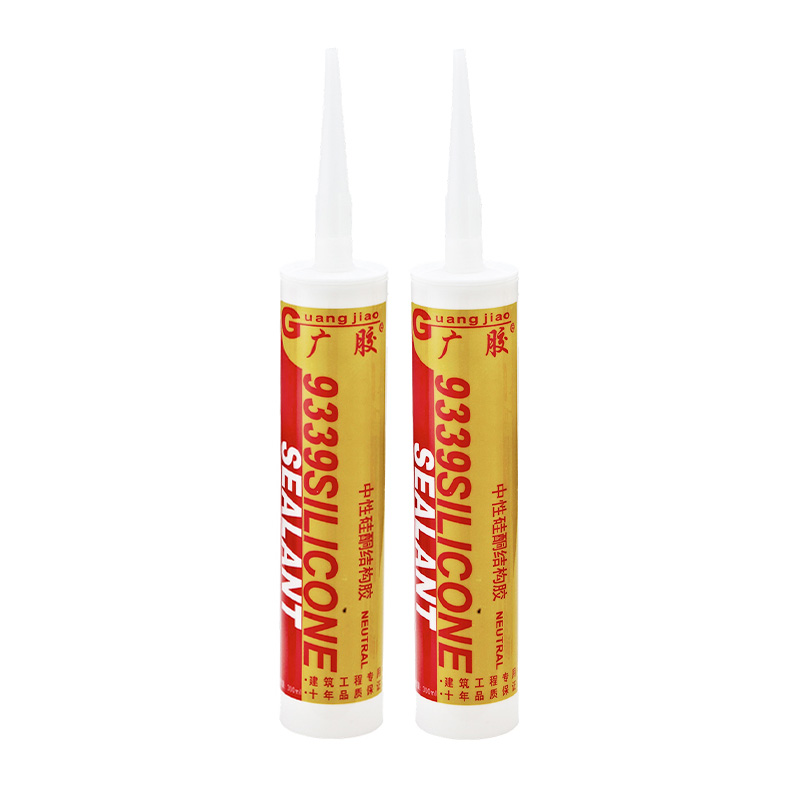
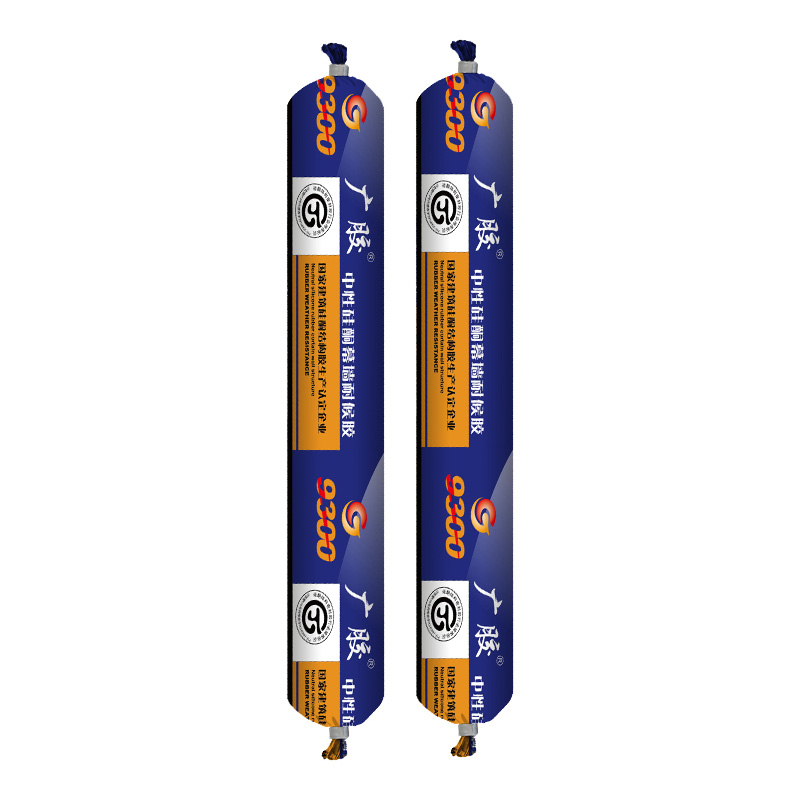
Content
Procurement teams and maintenance engineers frequently treat silicone sealant and silicone adhesive as interchangeable line items on a purchase order. Both materials share a similar base polymer family, both cure at room temperature, and both are sold in cartridges that look nearly identical on a shelf. The confusion is understandable, but it becomes expensive when the wrong product is applied to a joint that either needs to move freely or needs to carry structural load.
The practical difference comes down to two competing mechanical goals. A sealant is engineered to absorb repeated movement without losing its bond line, while an adhesive is engineered to resist separation under sustained mechanical stress. Choosing between silicone glue vs silicone sealant is really a question of whether the joint in front of you needs to flex or needs to hold still.
This article breaks down the property differences, the typical application domains for each product type, and how neutral cure formulations shift the comparison further when metal substrates or sensitive electronics are involved.
Every silicone formulation sits somewhere on a spectrum between elongation capacity and peak bond strength. Manufacturers cannot maximize both properties in a single formulation, because the crosslink density that produces high tensile strength also reduces how far a material can stretch before it tears.
Expansion joints, curtain wall perimeters, and ductwork seams experience thermal cycling every day. A joint that moves five millimeters between summer and winter needs a fill material that can stretch and compress repeatedly without cracking at the bond line. A high-strength adhesive placed in that same joint will resist the movement rather than absorb it, and the resulting stress concentrates at the substrate interface until adhesive failure or substrate damage occurs.
Panel lamination, bracket bonding, and enclosure assembly rarely involve intentional movement. In these applications, the priority shifts to load transfer across the bond line. A softer, more elastic sealant would allow creep under sustained load, which is unacceptable when the bond is carrying part of the structural path.
| Property | Silicone Sealant | Silicone Adhesive |
|---|---|---|
| Primary function | Gap filling and movement absorption | Load-bearing bonding |
| Elongation at break | 400 to 600 percent | 100 to 250 percent |
| Tensile strength | 0.4 to 1.0 MPa | 1.0 to 3.5 MPa |
| Typical joint width tolerance | Up to 25 percent of joint width movement | Minimal designed movement |
Sealing and bonding solve different problems even when the raw material looks similar in the cartridge. Sealing is about maintaining an airtight or watertight barrier while permitting relative motion between two substrates. Bonding is about transferring mechanical load from one substrate to another with minimal relative motion.
A joint that is sealed but not designed to bond will still fail if adhesive is used where movement was expected, because the material has no elongation reserve left to absorb the next cycle.
The neutral cure silicone sealant category dominates applications where a joint must remain weathertight while tolerating ongoing dimensional change. Below are the domains where sealant selection is the correct default rather than a compromise.
Across these silicone sealant uses, the common thread is a joint design that already accounts for movement. The sealant's role is not to hold the assembly together mechanically, since fasteners or framing already do that job, but to maintain the environmental barrier while the substrates shift independently of one another.
The term industrial silicone glue is often used loosely, but in engineering terms it refers to formulations selected for adhesive strength rather than elongation. These products are chosen when the bond line itself is part of the mechanical design.
Potting compounds and component staking rely on adhesion to keep parts fixed against shock and vibration inside enclosures. Movement at the bond line here is not a design feature; it is a failure mode that leads to intermittent electrical faults over time.
Laminated panel assemblies, where a silicone layer bonds two rigid facings together, depend on shear strength across the full bonded area. A softer sealant-grade material would allow the facings to slide relative to each other under load, causing delamination well before the expected service life.
| Application | Recommended Type | Reason |
|---|---|---|
| Curtain wall expansion joint | Sealant | Absorbs thermal movement |
| Enclosure component staking | Adhesive | Requires fixed bond under vibration |
| Panel lamination | Adhesive | Shear load transfer across bond area |
| HVAC duct seam | Sealant | Vibration and thermal cycling tolerance |
Cure chemistry adds another variable to the silicone sealant vs silicone adhesive decision. Acidic cure systems release a byproduct during curing that can corrode certain metal substrates and irritate installers in confined spaces. Neutral cure systems avoid that byproduct, which broadens where the material can be safely applied.
Neutral cure formulations are generally preferred on aluminum framing, coated metals, and painted surfaces where an acidic byproduct could compromise the substrate finish over time. This makes neutral cure the more common choice for exterior glazing and metal panel work, regardless of whether the joint is being sealed or bonded.
Enclosed installations, such as ductwork interiors or equipment housings with limited ventilation, also favor neutral cure systems because the curing process generates less odor and lower volatile release during application. This is a practical installation consideration rather than a change to the underlying tensile or elongation properties discussed earlier.
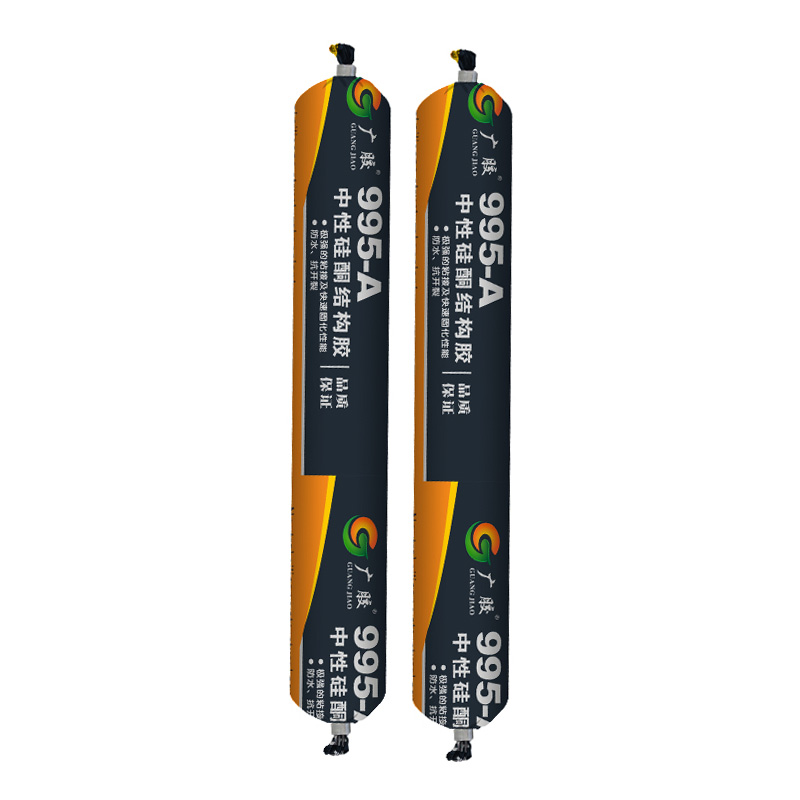
A simple decision sequence helps avoid the most common misapplication mistakes on site.
| Symptom | Likely Cause |
|---|---|
| Cracking along the bond line after seasonal cycling | Adhesive-grade material used in a movement joint |
| Slow separation or creep under constant load | Sealant-grade material used in a load-bearing bond |
| Discoloration or corrosion near metal edges | Acidic cure system used on an incompatible substrate |
| Tearing at the substrate interface during thermal expansion | Elongation capacity exceeded by actual joint movement |
Most field failures trace back to a mismatch between the mechanical objective of the joint and the property profile of the material chosen, rather than to a defective batch. Reviewing the joint's expected movement range before specification avoids the majority of these issues.
Sealant is optimized for high elongation to absorb joint movement, while adhesive is optimized for tensile and shear strength to carry mechanical load with minimal designed movement.
It is not recommended, since the lower elongation capacity of adhesive-grade material increases the risk of cracking or bond line failure once the joint reaches its expected movement range.
Neutral cure formulations avoid releasing a corrosive byproduct during curing, making them safer for use on coated metals, aluminum framing, and enclosed spaces with limited ventilation.
The terms are often used interchangeably in casual conversation, but silicone glue typically refers to adhesive-grade formulations selected for bonding strength rather than joint movement absorption.
Evaluate whether the substrates are expected to shift relative to each other due to thermal cycling, vibration, or settlement. If movement is expected, prioritize elongation; if the assembly must remain fixed, prioritize bond strength.
Tensile strength is secondary in sealant applications compared to elongation at break, since the primary failure mode in a moving joint is tearing from repeated stretching rather than a single high-load event.
Subscribe to our newsletter
Product
Quick Links
contact Us
No. 9, 2nd Road, Huicheling Industrial Park, Heping Town, Changxing County, Huzhou City, Zhejiang Province, China
+86-572-6550355
+86-17769681106


 English
 Français
 Español