Content
Building a glass fish tank starts with one decision that does not forgive shortcuts: the silicone. A sealant with a mold inhibitor can stay elastic and still poison the water; a construction-grade product with solvents can fail before the tank is filled. The good news: a correctly selected aquarium silicone eliminates both problems.
For anyone standing in front of a shelf of sealants, the short version is simple: choose a 100% silicone rubber sealant, confirm that it contains no fungicide or biocide, and decide whether an acetoxy or a neutral cure formula fits the materials in your build. The rest of this guide explains why those three points matter, how to apply the sealant, and where a typical aquarium project goes wrong.
Ordinary bathroom and kitchen sealants contain mold inhibitors. Those additives prevent black stains in damp corners, but they leach slowly into water and can be toxic to fish, shrimp and aquatic plants. Aquarium-grade silicone omits those additives and forms a more inert elastic seal.
The second difference is the base polymer. Some general-purpose products are not pure silicone; they include solvents or fillers that improve adhesion on demanding substrates but may remain soluble when submerged. A dependable aquarium silicone will normally say 100% silicone or silicone rubber on the cartridge. That one label is the quickest filter when you compare products.
The cure chemistry affects both adhesion and safety. In the aquarium world, the two common options are acetoxy (acidic curing) and neutral-cure formulas.
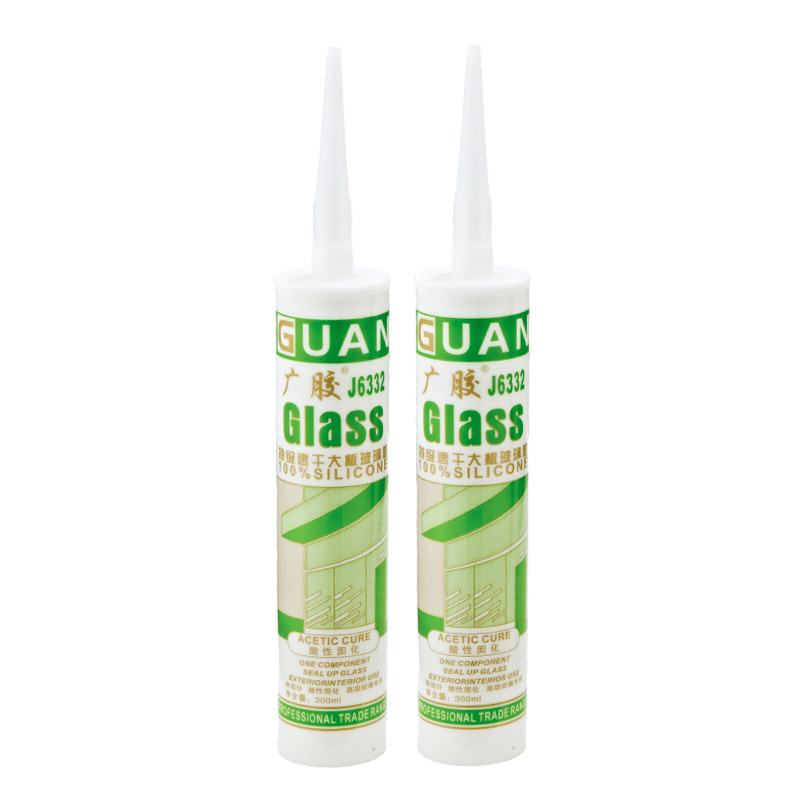
Acetoxy sealants release acetic acid while curing. That sharp vinegar smell is temporary and harmless once curing has finished. They are the traditional choice for glass-to-glass fish tanks because they bond to glass quickly and firmly. A clear explanation of this curing behavior is available in our article on what acidic-curing silicone sealant is used for.
Neutral-cure sealants release a milder by-product instead of acid. They are gentler on plastics and metals, so they suit acrylic panels, anodized aluminium braces, pumps and other equipment inside the tank. The trade-off is that neutral formulas often cure more slowly and are more sensitive to humidity.
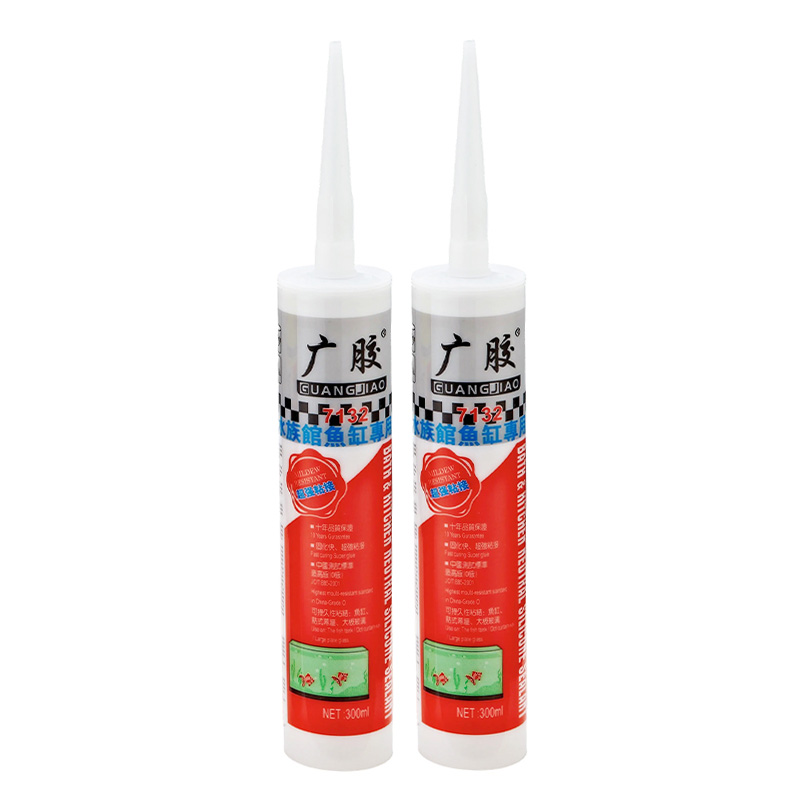
Read the label, not just the brand. The safest shortcut is a product made explicitly for aquarium use, because the manufacturer has already removed the additives that threaten aquatic life. For a glass fish tank, the Guangjiao 7132 aquarium silicone sealant is one such example.
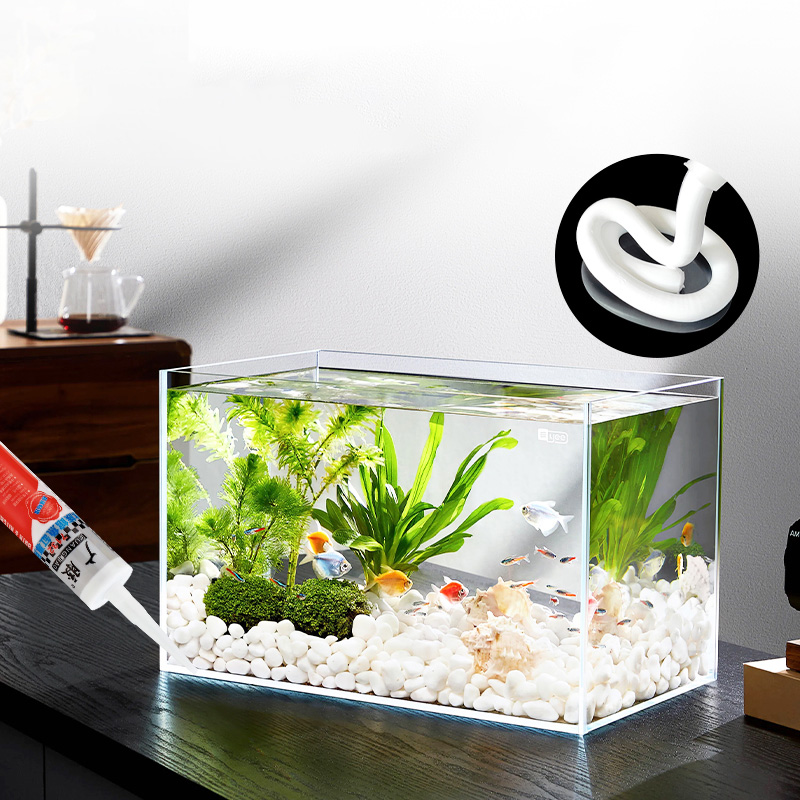 Guangjiao 7132 Aquarium Silicone Sealant for Fish TankThis one-component acidic silicone sealant is formulated for aquariums, offering long-term water resistance and biocompatibility. It suits glass and acrylic tanks, with transparent finish, elasticity, and temperature tolerance. Check it here for safe tank sealing.View Product →
Even when the cartridge says aquarium safe, check these five points:
| Point | Why it matters | What to look for |
|---|---|---|
| Base polymer | Solvents can leach into water | 100% silicone |
| Additives | Mold inhibitors are toxic to fish | No fungicide, no biocide |
| Cure chemistry | Acetoxy grips glass fast; neutral is gentler on plastic and metal | Match the tank material |
| Cure time | Water must not contact uncured sealant | 24 to 72 hours for a full cure |
| Compatibility | Acrylic needs a non-aggressive sealant | Neutral cure for acrylic |
Good preparation does more for the final bond than any special tool. Use these steps for a standard glass tank.
Do not leak-test too early. The vinegar smell from an acetoxy sealant means curing is still releasing by-products; wait until that smell has cleared before filling the tank.
Yes, when the formula contains no fungicide or biocide and has cured completely. Once the sealant stops releasing by-products, it is chemically inert underwater.
Wait at least 24 hours for thin joints, and 48 to 72 hours for thicker beads or cooler rooms. A full cure depends on temperature, humidity and joint thickness.
Yes, but use a neutral-cure formula. Acetoxy silicone can craze or cloud some acrylics. Our comparison of neutral cure and acetoxy silicone covers the material differences in more detail.
Not exactly. Food-grade silicone resists contamination and may be safe for fish, but it is not always formulated for long-term underwater bonding. An aquarium-specific product removes the guesswork about adhesion and leach resistance.
You can, as long as the silicone is safe for aquatic life and the rocks are compatible with the sealant. Clean the rock surfaces first; rougher surfaces usually bond better than polished ones.
Aquarium silicone is not a mystery product. It is a 100% silicone sealant without additives, matched to the tank material, applied in dry conditions, and given enough time to cure before water touches it.
For a straightforward glass fish tank, an aquarium-dedicated product such as the Guangjiao 7132 removes most of the variables. Before assembly, check the official cure guidance and buy an extra cartridge so you can practise a clean bead on scrap glass. That small rehearsal will save you from a leaking tank and a full second build.
Subscribe to our newsletter
Product
Quick Links
contact Us
No. 9, 2nd Road, Huicheling Industrial Park, Heping Town, Changxing County, Huzhou City, Zhejiang Province, China
+86-572-6550355
+86-17769681106


 English
 Français
 Español