Content
Silicone sealant temperature range is one of the first specifications a contractor or facility manager checks when selecting a sealant, because getting it wrong can lead to cracked joints, failed adhesion, or premature weathering. The practical answer is straightforward: for most standard silicone construction sealants, the service temperature range is roughly -50°C to +230°C, while the application temperature range is typically -5°C to +40°C. But those numbers are only the start. Different formulations, cure chemistries, and project environments push the boundaries in both directions.
When someone talks about the "temperature range" of a silicone sealant, they often mix up two very different values. The application temperature is the temperature of the surrounding air and substrate when you install the sealant. The service temperature is the range the fully cured sealant can survive while doing its job.
Best results at 20-25°C with normal humidity.
Typical for general purpose silicone sealants.
Only for specially formulated high-temperature grades.
For most architectural silicone sealants, the service range is around -50°C to +230°C for continuous exposure. Some specialty formulas can go further, especially for short bursts. In contrast, application is much narrower. Most manufacturers recommend a substrate temperature between 5°C and 40°C, with an ideal range of 20°C to 25°C.
Application temperature is often the more dangerous spec because it is easy to ignore. A cold joint can be invisible but still create a terrible bond. Here are the key thresholds:
Humidity also matters. A little moisture helps neutral cure silicone to cross-link. If the air is too dry, curing takes longer; if it is too humid, the surface may become tacky.
Remember: a sealant that is applied outside its recommended temperature window can fail in the first year, even if the product itself has a great service range.
For a deeper look at how high-temperature and cold-weather silicone sealants outperform standard formulas, see our comparative guide on how high-temperature and cold-weather silicone sealants outperform standard formulas.
Once cured, silicone rubber stays flexible at very low temperatures. Unlike many organic sealants that turn hard and brittle, silicone has a glass transition temperature around -50°C to -70°C depending on the exact polymer and filler package. That means a cured joint in a cold storage room can absorb thermal movement without cracking.
For projects such as cold storage construction, the sealant must maintain adhesion and flexibility at temperatures far below zero. The neutral cure silicone sealants used in our production line are designed with low-temperature flexibility in mind. This application demands careful selection of the formula; not every sealant works as a cold storage construction sealant. Choosing a product that is evaluated for cold climate service will save you from expensive re-sealing later.
At the hot end, silicone is outstanding. Standard construction-grade silicone can operate continuously at 200°C to 230°C and tolerate short excursions to 300°C. This makes it one of the few elastomeric sealants that works both in a freezer and next to an oven.
For applications with direct flame, hot exhaust, or industrial equipment, a standard weatherproof sealant may not be enough. In those cases, you need a formulation that resists thermal degradation, retains elasticity, and does not release harmful fumes. Our Guangjiao fireproof flame-retardant high-temperature sealant is built for exactly this scenario. It is designed to maintain a reliable seal in high-heat environments while offering added fire resistance. For extreme heat zones like boiler rooms, flue surrounds, and oven door gaskets, this grade provides the thermal confidence that a standard construction sealant cannot match.
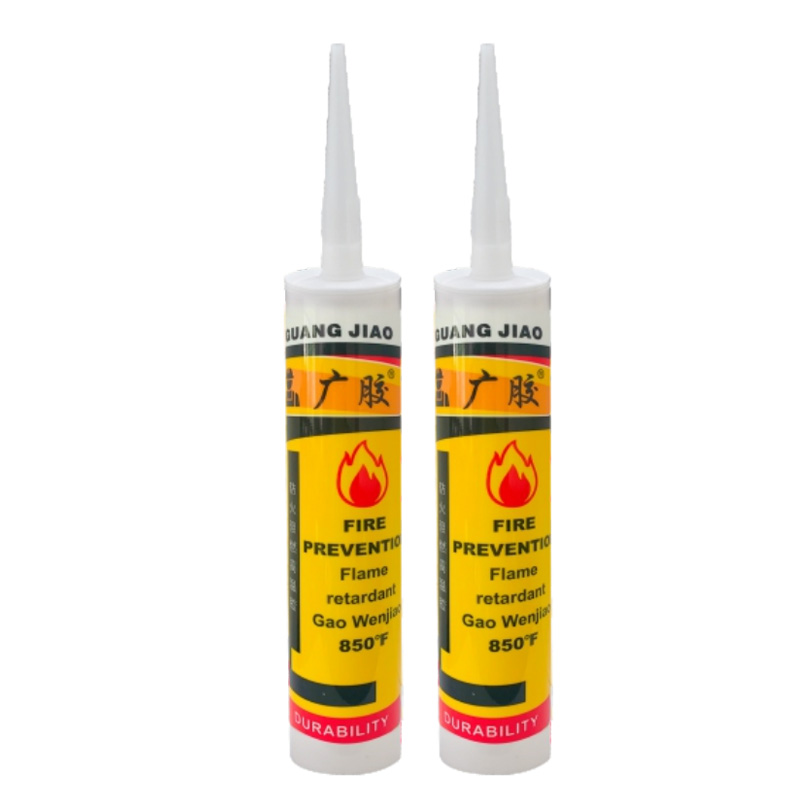 Guangjiao Fireproof Flame-Retardant High-Temperature SealantThis sealant forms a carbonized layer when exposed to fire, preventing flame and smoke spread. It suits high-heat areas like boiler rooms and flue surrounds, offering reliable sealing and fire resistance for passive protection.View Product →
Here is a quick selection table based on the most common temperature-related needs. The values are typical for neutral cure silicone sealants; always confirm the specific datasheet for your product.
| Project Need | Typical Service Range | Key Selection Point |
|---|---|---|
| Curtain wall / facade | -40°C to +150°C | Choose a weatherproof architectural sealant with high UV resistance and movement capability. |
| Kitchen / oven surrounds | Up to +250°C | Choose a high-temperature formulation qualified for repeated heat exposure. |
| Cold storage / freezer | -50°C to +120°C | Choose a sealant with verified low-temperature flexibility. |
| Structural glazing | -40°C to +150°C | Choose a structural glazing sealant with certified tensile adhesion. |
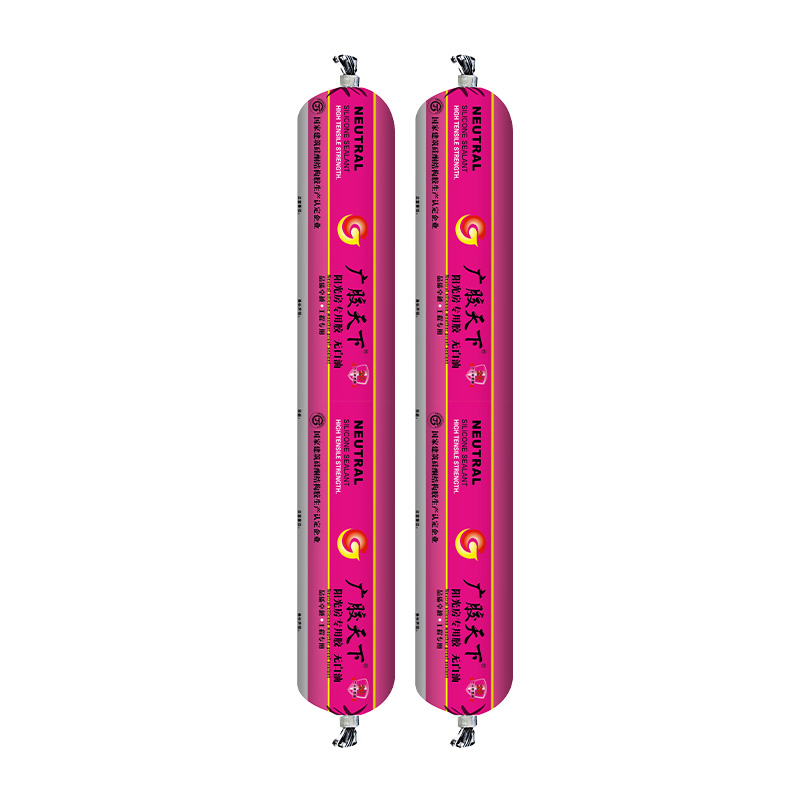
For facade and curtain wall work, you can rely on a proven formulation such as Guangjiao 2000 high-performance silicone weatherproof architectural sealant. It combines weather resistance with a service range that suits the moderate to extreme climate swings seen on modern buildings.
 Guangjiao 2000 High-Performance Silicone Weatherproof Architectural SealantA neutral-curing architectural sealant with excellent weather and aging resistance. It handles significant joint displacement, making it ideal for curtain wall projects and facades exposed to temperature swings.View Product →
Before you approve a sealant, always ask the supplier for the tested service range and application temperature, not just the marketing copy. The data sheet should state both the continuous service temperature and any short-term maximum that is permitted.
Apply between 4°C and 40°C. The ideal range is 20°C to 25°C at normal humidity.
Most standard formulas handle 200°C to 230°C continuously, with short-term spikes up to 300°C. Specialty fire-resistant grades are rated for even higher heat exposure.
Yes. Cured silicone remains flexible down to -50°C or lower. But do not install it below 4°C because the cure slows too much and condensation can weaken the bond.
Cold weather extends the cure time significantly. At -5°C, a full cure may take several times longer than at room temperature. Use a fast-cure neutral formula if you need a quick turnaround.
The surface skins over quickly, which can trap uncured material and reduce adhesion. Work in shaded areas and keep the sealant tube at moderate temperature.
No single silicone sealant covers every temperature scenario. Start with the application temperature on your site, then work toward the service range your joint will see. If you are between formulas, choose one wider than your requirement and verify it with the datasheet. Getting these two numbers right is the difference between a seal that lasts decades and one that fails before the building is even finished.
Subscribe to our newsletter
Product
Quick Links
contact Us
No. 9, 2nd Road, Huicheling Industrial Park, Heping Town, Changxing County, Huzhou City, Zhejiang Province, China
+86-572-6550355
+86-17769681106


 English
 Français
 Español