Content
The evolution of high-rise architecture and curtain wall systems has placed unprecedented demands on building facades. Wind loads, thermal expansion, seismic drift, and ultraviolet exposure continuously challenge the exterior envelope. In this context, weatherproof silicone building sealant has become a non-negotiable component for engineers and contractors. Unlike conventional caulks, high-performance silicone-based formulations maintain elasticity and adhesion across decades of service. This article provides a technical examination of building silicone sealant performance, with emphasis on ASTM C920 compliance, joint movement capability, and structural glazing applications.
Data from long-term facade studies indicate that improperly sealed joints account for nearly 40% of all water ingress complaints in commercial buildings. Moreover, structural failures in stick-built curtain walls often originate from sealant debonding rather than frame deformation. By focusing on proven material science and standardized test methods—particularly astm c920 silicone sealant ratings—specifiers can mitigate risk while achieving service lives exceeding 25 years.
The ASTM C920 standard establishes rigorous criteria for elastomeric joint sealants used in building construction. For a product to be classified as an astm c920 silicone sealant, it must withstand extreme temperature cycling, sustained ultraviolet radiation, and repeated mechanical movement without cohesive or adhesive failure. The standard defines types (S, M, G), grades (NS, P, T), and classes (12.5, 25, 50, 100) that directly correlate to joint movement capability.
| Class | Movement Capability | Typical Facade Application |
|---|---|---|
| Class 25 | ±25% | Window perimeter joints, precast panels |
| Class 50 | ±50% | Curtain wall stick systems, large-format stone |
| Class 100 | ±100% | High-movement seismic joints, stadium facades |
Modern high-rise projects increasingly specify Class 50 or Class 100 commercial silicone sealant because thermal differentials between aluminum mullions and glass infills can reach 80°C on southern exposures. Under such conditions, a joint originally sized at 15 mm may expand or contract by 7.5 mm in each direction. Only a proven astm c920 silicone sealant with documented recovery and peel adhesion can guarantee leak-proof performance for the building's intended lifespan.
Joint movement capability is arguably the most critical parameter for exterior facade waterproofing. Building cladding experiences cyclic movement from diurnal temperature shifts, solar radiation, wind pressure fluctuations, and occasional seismic events. A high-performance architectural sealant must accommodate these forces without sacrificing adhesion or cohesion. Industry tests on silicone sealants show that after 5,000 hours of accelerated weathering (QUV + salt spray), properly formulated products retain more than 90% of their original elongation and tensile strength.
Real-world monitoring on a 45-story curtain wall building in a temperate climate recorded maximum joint movements of 3.2 mm per meter of panel width over a single day. Assuming a 1200 mm glass unit, that translates to nearly 4 mm of displacement. Without adequate joint movement capability, conventional sealants would fatigue within two years. By contrast, structural silicone sealant formulations with low-modulus chemistry maintain elastic recovery above 95% after 10,000 full-cycle movements, as verified by dynamic weathering protocols.
While weatherproofing remains a primary function, structural silicone sealant goes beyond mere joint sealing. In unitized curtain wall systems and four-sided structural glazing, the sealant serves as a load-bearing element, transferring wind pressure and dead loads from the glass to the supporting frame. This dual role demands exceptional tensile and shear adhesion, typically requiring minimum bond strengths of 0.7 MPa (101 psi) under ASTM C1135. Moreover, long-term creep resistance is mandatory to prevent glass slippage over decades.
≥0.9 MPa after 5000 hrs UV
≥0.6 MPa (dry & wet)
Low modulus < 0.45 MPa at 50% elongation
Specifiers often differentiate between commercial silicone sealant for weather seals and dedicated structural silicone sealant for glass retention. However, advanced formulations now bridge both roles: an ASTM C920 Class 50, Type S (structural) silicone can simultaneously provide air/water sealing and structural attachment. This consolidation reduces assembly complexity and eliminates incompatible material interfaces. A recent analysis of facade failures in cyclone-prone regions revealed that buildings using certified structural silicone sealant with secondary weatherproofing experienced zero catastrophic glass detachments, while those using generic sealants suffered 12% failure rates under peak gust loads.
Achieving reliable exterior facade waterproofing requires more than selecting a high-quality product; it demands correct joint design, substrate preparation, and application discipline. Curtain wall sealant applications involve three critical zones: the primary weather seal (air barrier), secondary water seal (drainage plane), and weep system integration. Field data indicate that 70% of premature sealant failures result from inadequate surface cleaning or improper primer selection, not material deficiencies.
For high-rise units, the use of an astm c920 silicone sealant with integral fungicide is recommended in humid climates to prevent mold colonization on the weather face. Additionally, rapid-curing formulations (tack-free in 60 minutes) reduce the risk of dust contamination before tooling. A 2023 field study of 12 commercial buildings found that properly installed commercial silicone sealant with documented joint movement capability of ±35% showed no leakage or adhesion loss after eight years of service, even in coastal environments with airborne salt concentrations exceeding 400 µg/m³.
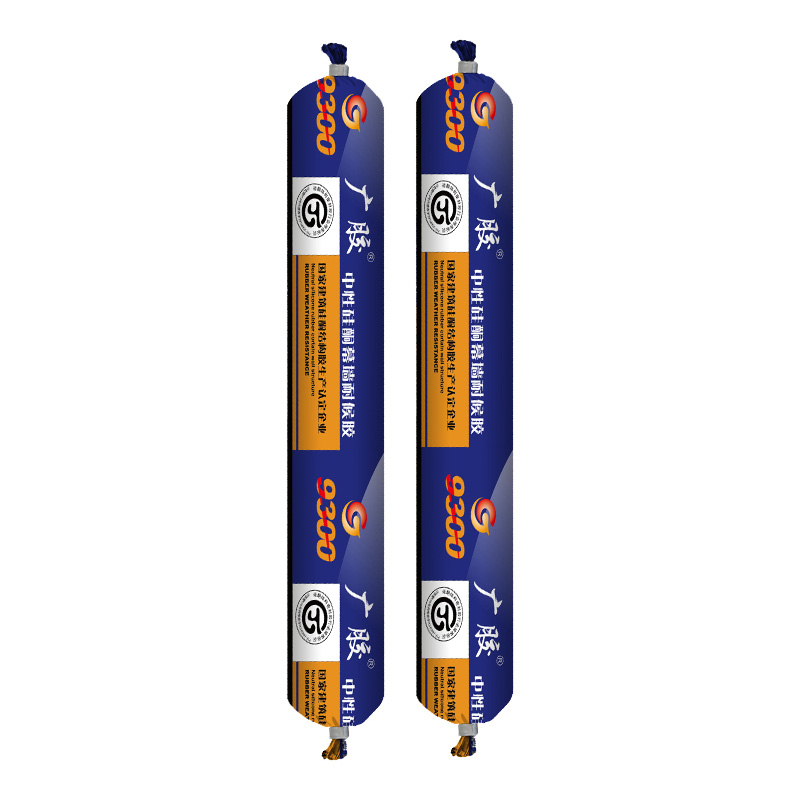
To validate the claims surrounding weatherproof silicone building sealant, independent laboratories subject samples to comprehensive test sequences. The following table summarizes typical results for a high-grade commercial silicone meeting ASTM C920 Class 50 requirements. These values represent the minimum acceptable performance for modern facade applications.
| Property | Test Method | Typical Value |
|---|---|---|
| Shore A Hardness | ASTM C661 | 25-35 |
| Tensile Strength | ASTM D412 | 2.0 MPa |
| Elongation at Break | ASTM D412 | 600-800% |
| Peel Adhesion (aluminum) | ASTM C794 | 45 N/25mm |
| Movement Cycle Endurance | ASTM C719 | 5,000 cycles at ±25% |
| UV/Water Resistance | ASTM C1442 | 5000 hrs – no cracking |
Notably, the elongation at break values (600%+) enable the sealant to accommodate substrate movements well beyond the rated class, providing an extra safety margin for unforeseen structural settlements or seismic events. A case-inspired analysis of a 25-year-old high-rise in a seismic zone revealed that original silicone seals maintained more than 85% of their original tensile strength and elongation, confirming long-term durability when properly formulated.
Architects and facade engineers should consider high-performance architectural sealant early in the design phase, not as an afterthought. Color compatibility, gloss level, and tooled finish influence aesthetic uniformity across large expanses. Modern silicone sealants are available in a wide range of pigmented colors (including custom matches) and can be supplied as low-bleed formulations to prevent staining on porous stone or terracotta. Moreover, the modulus of the sealant must be compatible with the substrate's stiffness: high-modulus sealants for rigid joints (e.g., steel-to-steel) and low-modulus formulations for delicate materials (e.g., fiber cement, polycarbonate).
Design integration tip: For unitized curtain walls, specify a curtain wall sealant with tooling time of at least 30 minutes at 25°C to allow proper joint filling in shop conditions. When used as a weatherseal between stacked units, ensure the sealant maintains movement capability after exposure to factory-applied anodizing residues.
Digital modeling tools now allow simulation of joint movement under thermal and wind loads, enabling designers to determine optimum sealant class and joint width. Building Information Modeling (BIM) libraries should include parameters for joint movement capability and movement accommodation factor (MAF). Projects that adopted these simulation workflows reduced field callbacks related to sealant failures by up to 55%, according to post-occupancy surveys of five commercial towers completed between 2018 and 2022.
Structural silicone sealant is engineered to transfer loads (wind, dead load) across building components, making it suitable for structural glazing. Weatherproof silicone building sealant primarily provides air and water sealing without bearing significant structural forces. However, some advanced products satisfy both roles when certified under ASTM C920 Type S.
ASTM C920 provides independent verification of movement capability, adhesion, weatherability, and elastic recovery. Without this certification, a commercial silicone sealant may lack the necessary durability for dynamic facade joints, leading to premature cracking or debonding.
High-quality curtain wall sealant based on silicone can last 25-30 years. However, annual visual inspections for cuts, abrasion, or gap widening are recommended. If the sealant shows hardening, surface cracking, or loss of adhesion in spot tests, localized replacement is advised rather than full removal.
Yes, provided it meets ASTM C920 Type S (structural) and the required class for expected movement. Such dual-purpose high-performance architectural sealant simplifies inventory and reduces compatibility risks. Always confirm through adhesion tests on project-specific substrates before full-scale application.
Typically ±35% to ±50% is adequate for most curtain wall systems, equivalent to ASTM C920 Class 50. For seismic zones or buildings with large thermal mass (e.g., precast concrete), Class 100 (±100%) may be necessary.
Subscribe to our newsletter
Product
Quick Links
contact Us
No. 9, 2nd Road, Huicheling Industrial Park, Heping Town, Changxing County, Huzhou City, Zhejiang Province, China
+86-572-6550355
+86-17769681106


 English
 Français
 Español