Content
Procurement teams building long-term supply agreements rarely start with a single product. They start with a question: can this partner support volume growth, consistent batch quality, and technical documentation across several product lines at once. That question is exactly why the search for dependable neutral cure silicone sealant production has shifted from a purely price-driven exercise into a structured evaluation of manufacturing capability.
Silicone sealant manufacturers serve two very different customer groups. Retail buyers want a tube that performs in a bathroom or window frame. OEM buyers want a supplier who can hold formulation consistency across container loads, adapt packaging to private label requirements, and respond to engineering questions about substrate compatibility. This article focuses on the second group and on the operational signals that separate a dependable sealant supplier from one that simply fills orders.
The shift toward capability-based evaluation has been accelerated by two market pressures. First, product lines have multiplied. A single OEM buyer may now need a neutral cure sealant for glazing work, a fast cure grade for accelerated installation schedules, and an interior decoration formulation for finishing trades, all sourced from the same supplier to simplify procurement. Second, downstream customers increasingly ask for traceability, which means a supplier's internal record-keeping is no longer a back-office detail but a contractual requirement.
These pressures explain why sealant companies that once competed mainly on price are now investing in laboratory capacity, batch tracking software, and dedicated technical support staff. For an OEM buyer, understanding which of these investments a candidate supplier has actually made is far more useful than comparing headline unit prices alone.
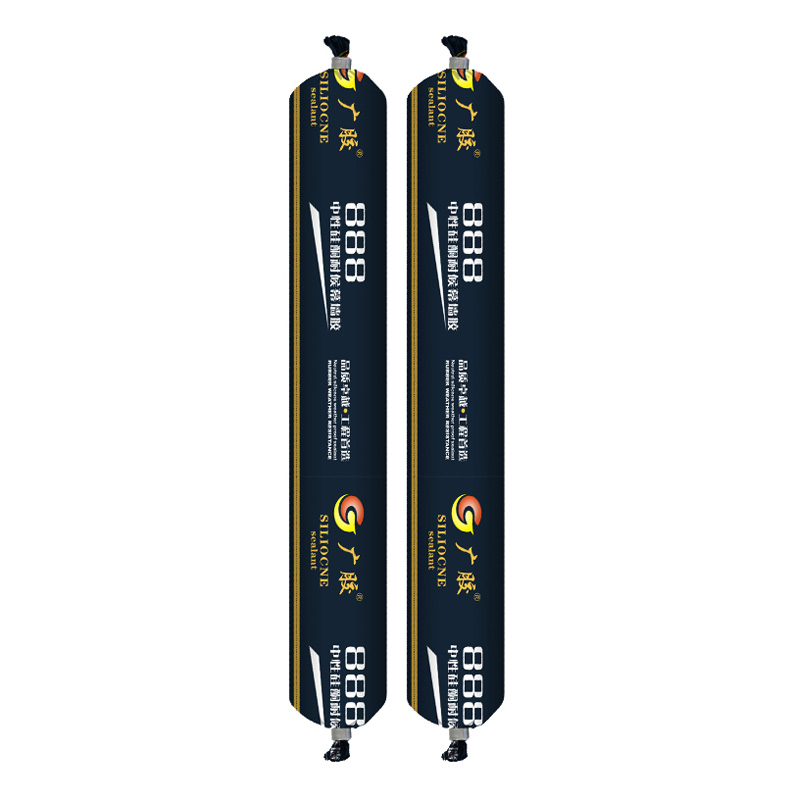
Before comparing sealant manufacturers, it helps to understand what separates the common chemistries used in construction and interior applications. Neutral cure formulations release a mild by-product during curing and are generally selected where corrosion sensitivity or odor control matters, which is why they dominate glazing, curtain wall, and interior finishing specifications.
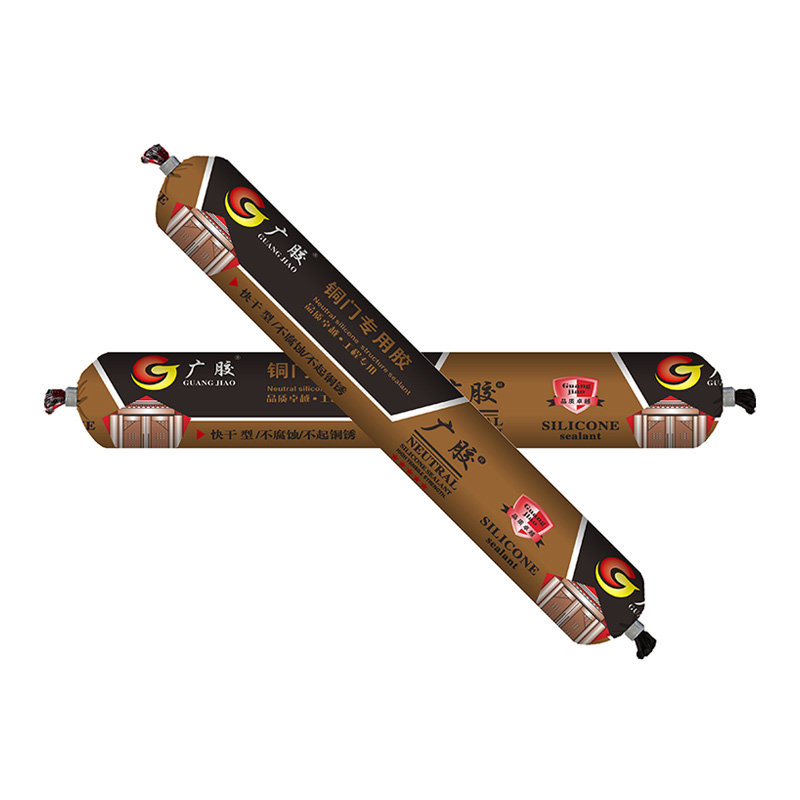
A properly formulated neutral cure silicone sealant is engineered to bond well with glass, aluminum, and painted metal surfaces without the sharp odor associated with acid cure alternatives. This makes it a common default for occupied interior spaces and for assemblies where metal substrates are present.
Some projects need shorter skin time and faster handling strength, particularly on fast-moving installation schedules. A 995 fast cure neutral silicone construction sealant is formulated for exactly this scenario, giving installers a shorter working window before the joint can be left undisturbed, which reduces callback risk on tight construction timelines.
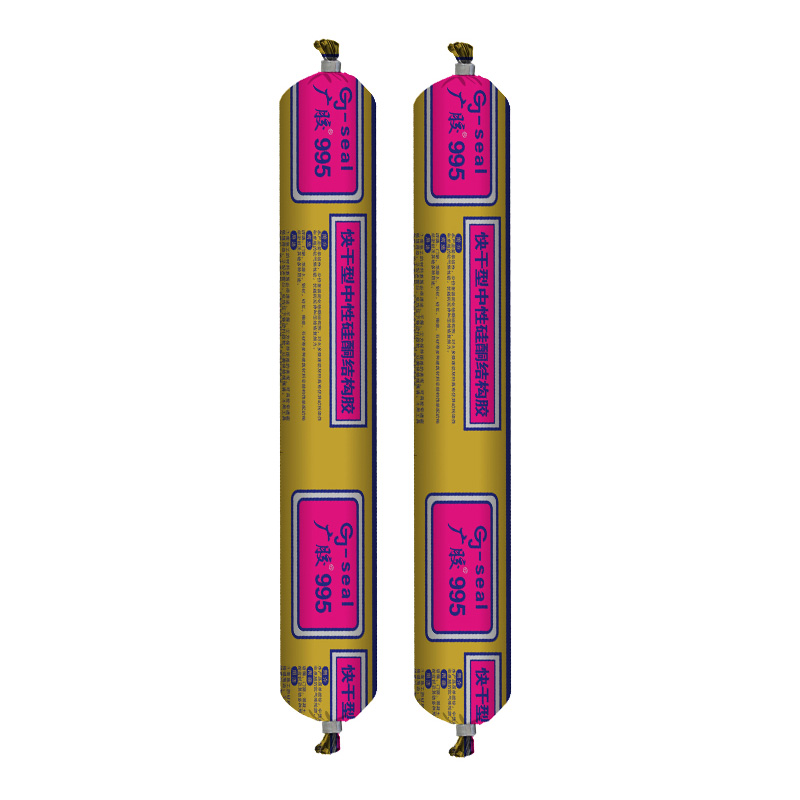
Faster handling strength is particularly valuable on projects where the joint will be exposed to vibration, foot traffic, or weather shortly after installation, such as exterior panel seams on an active job site. In these cases, a slower curing system risks the bead being disturbed before it has developed enough strength to resist movement, which can lead to surface tearing or adhesion loss at the edges of the joint.
It is worth noting that faster cure speed is not automatically better for every application. Larger structural joints, or those requiring more open time for tooling and inspection, may perform better with a standard cure schedule. The right choice depends on joint geometry, ambient temperature during installation, and how quickly the assembly needs to be load-bearing, which is why technical consultation with the manufacturer before large orders is generally worthwhile.
Interior finishing work has its own priorities: low odor, good workability at room temperature, and color matching against painted trims. Interior decoration silicone sealant products are typically formulated with these finishing constraints in mind rather than for structural or curtain wall loads.
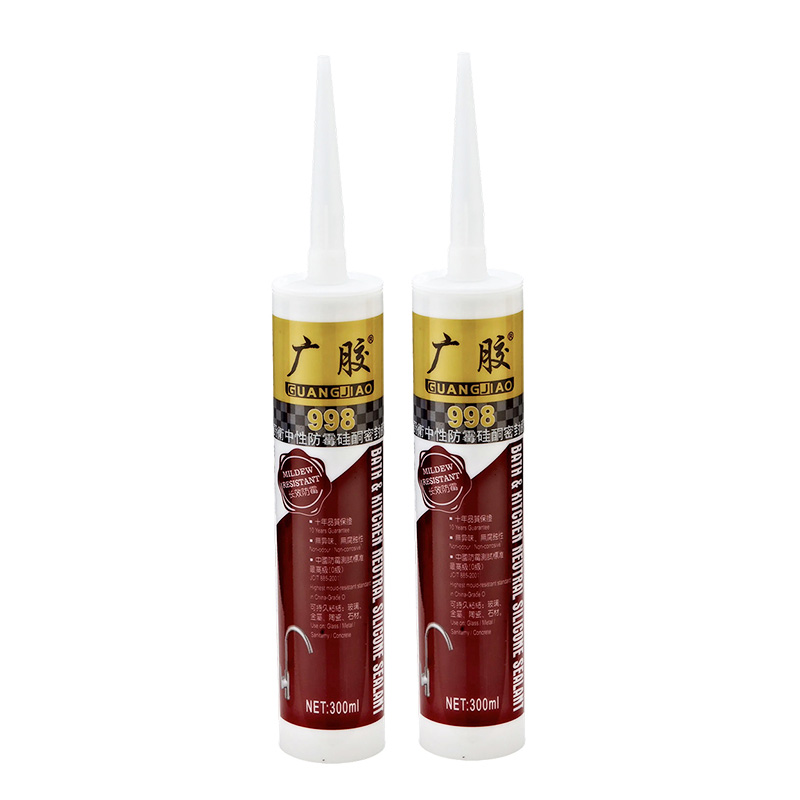
Beyond odor and color matching, interior finishing crews also care about tooling time, meaning the window during which the bead can still be smoothed before it starts to skin over. A formulation that skins too quickly can leave a rough finish along visible trim lines, while one that stays open too long slows down the crew moving between rooms. A well-tuned interior grade balances both concerns rather than optimizing for cure speed alone.
Color range is another practical factor. Painted interior trims rarely come in a single shade of white, so a supplier that only offers one or two stock colors forces the installer into visible mismatches along the joint line. Buyers sourcing at volume should ask whether custom tinting is available and what the minimum order quantity is for a non-stock color, since this often becomes a deciding factor for finishing contractors working across multiple paint specifications.
When comparing silicone sealant manufacturers for an OEM contract, technical data sheets only tell part of the story. The table below outlines the operational areas that matter most once a supplier moves from sample approval to recurring production orders.
| Evaluation Area | What to Verify | Why It Matters for OEM Supply |
|---|---|---|
| Batch Consistency | Certificate of analysis per lot | Prevents rework caused by cure time drift |
| Raw Material Traceability | Supplier audit records | Supports regulatory and customer inquiries |
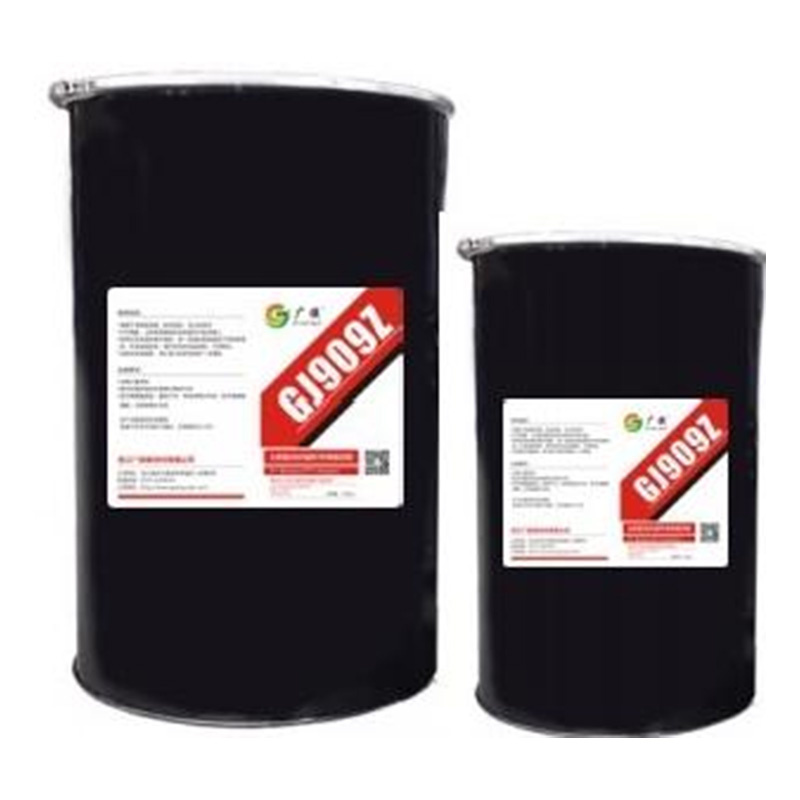
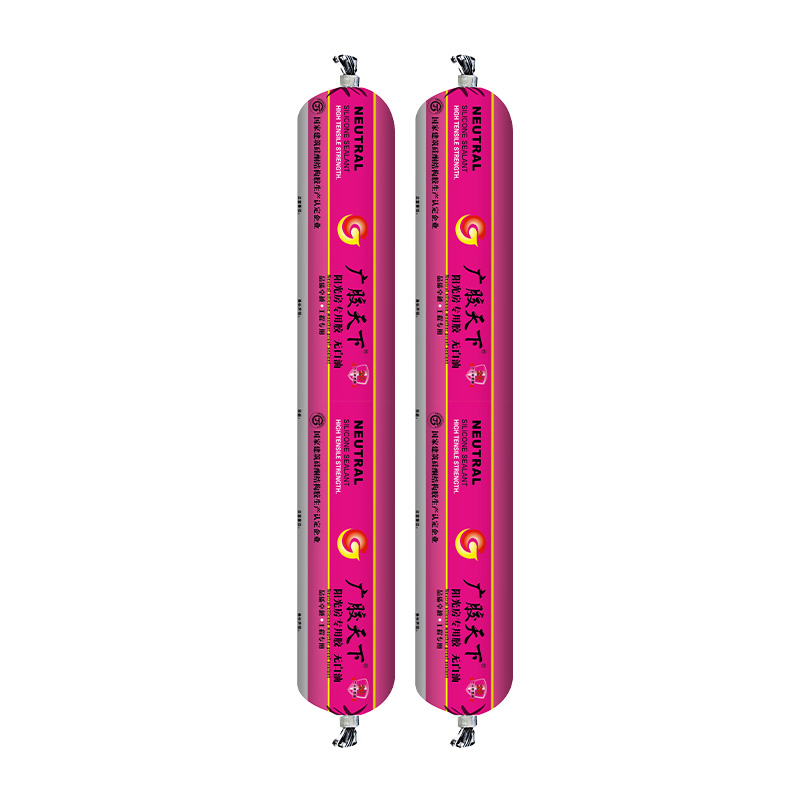
| Packaging Flexibility | Cartridge, sausage, and bulk pail options | Matches downstream filling or dispensing equipment |
| Lead Time Stability | Historical on-time delivery rate | Protects production schedules from stockouts |
| Technical Support | Access to formulation engineers | Speeds up substrate compatibility troubleshooting |
| Private Label Capability | Minimum order quantities for custom labeling | Enables brand-specific market positioning |
A silicone sealant supplier that scores well across all six areas is generally better positioned for a multi-year contract than one that only competes on unit price. Price volatility tends to follow raw material swings regardless of who the supplier is, so the areas above are where real differentiation happens.
Batch consistency deserves particular attention because it is the hardest area to verify from a data sheet alone. A supplier can publish an impressive cure time and adhesion figure, but those numbers only matter if every production lot lands within the same tolerance band. Requesting several months of historical certificates of analysis, rather than a single sample report, is a practical way to see whether variation is genuinely tight or whether the sample batch was simply an outlier.
Lead time stability is closely tied to how a manufacturer manages its own raw material inventory. Suppliers that rely on single-source feedstock without buffer stock are more exposed to delays when global supply tightens, which can cascade into missed delivery windows for the OEM buyer. Asking a candidate supplier how they handle a raw material shortage, rather than assuming it will never happen, often reveals more about long-term reliability than any single quarter of on-time delivery data.
Leading sealant suppliers for OEM manufacturing typically run a staged quality process rather than a single end-of-line check. The diagram below outlines a typical sequence from incoming raw materials to finished batch release.
Each stage generates a record that feeds into the certificate of analysis provided with the shipment. OEM buyers should ask whether these records are retained and searchable by lot number, since this is often the fastest way to resolve a field complaint months after delivery.
Raw material inspection typically checks incoming polymer and additive shipments against agreed specification ranges before they are released into production. This step catches supplier-side variation before it ever reaches the mixing stage, which is far cheaper to correct than discovering an out-of-spec batch after it has already been packaged and shipped.
Cure time verification and adhesion testing are usually run on representative samples pulled from each production batch rather than from a single master sample. This distinction matters because a mixing process can introduce small variations between the beginning and end of a run, particularly for larger batch sizes. Testing samples from multiple points in the batch gives a more reliable picture of what the customer will actually receive.
Finally, batch release and labeling should tie the physical product back to its test records through a lot number printed on the packaging. When an OEM buyer receives a shipment, this number is what allows any later quality question to be traced back to the specific mixing run, the raw material lots used, and the test results recorded at each stage above.
Working with a silicone supplier for OEMs is a logistics relationship as much as a chemical one. A few practical factors tend to decide whether a partnership scales smoothly:
Industrial automotive adhesives and sealants suppliers in particular tend to face stricter documentation demands, since automotive assembly lines often require lot traceability that ties directly back to a specific mixing batch. Sealant companies that already operate under this discipline are usually better prepared to extend the same rigor to general construction and interior decoration lines.
Container loading schedules are frequently underestimated during initial supplier evaluation, only to become a source of friction once orders reach a regular cadence. A supplier that consolidates shipments to fill a container efficiently may unintentionally delay a buyer's smaller order while waiting for enough volume to justify a full load. Clarifying expected shipment frequency and minimum order quantities before the relationship scales up avoids this becoming a recurring point of tension.
Safety stock agreements are particularly useful for OEM buyers running just-in-time production lines, where even a short delay in sealant delivery can stall an assembly process. Some sealant suppliers are willing to hold an agreed buffer of common SKUs at their own warehouse, releasing product against a rolling forecast rather than waiting for individual purchase orders. This arrangement shifts some inventory risk to the supplier but generally requires a demonstrated order history before it is offered.
Documentation that travels with the shipment, including safety data sheets, certificates of analysis, and country of origin declarations, also reduces friction at customs and internal receiving inspection. Buyers that have experienced a shipment held at a border because of missing paperwork tend to weight this factor much more heavily in future supplier selection than they did the first time around.
Not every OEM buyer needs a stock formulation. Custom silicone formulation work typically starts with a performance brief covering substrate types, expected joint movement, exposure conditions, and any color matching requirements. From there, a sealant manufacturer will usually run a small batch trial before committing to full-scale OEM sealant manufacturing.
Small-scale samples are tested against the buyer's own substrate rather than a generic panel.
Production batch is checked against the trial batch results before shipment approval.
Cartridge, pail, or bulk format is matched to the buyer's dispensing line.
This staged approach reduces the risk of committing to a full production run before the formulation has been validated against real-world assembly conditions.
The performance brief stage is worth investing time in, since vague requirements are the most common cause of a failed trial batch. Specifying expected joint width, anticipated movement range, exposure to ultraviolet light or moisture, and any cleaning chemicals the finished assembly will encounter allows the formulation team to narrow down the right base chemistry before running a single trial, rather than discovering a mismatch after the first shipment is already in the field.
Color matching requests deserve their own conversation early in the process, since achieving an exact match to a painted or anodized substrate can require several rounds of tinting adjustment. Buyers who bring a physical color reference sample to the initial brief, rather than a verbal description or a printed swatch, generally reach an acceptable match faster than those who rely on a color code alone.
Once a custom formulation has been validated, maintaining that consistency across future orders depends on the manufacturer keeping a documented formulation record on file. Without this, even small supplier-side substitutions to raw materials, made for reasons unrelated to the buyer's contract, can quietly shift the finished product's properties between order cycles.
OEM buyers often choose between sourcing directly from a wholesale silicone sealant factory or through a regional distributor. Each path has trade-offs worth weighing against order volume and technical support needs.
| Sourcing Model | Typical Advantage | Typical Trade-Off |
|---|---|---|
| Direct Factory Supply | Lower unit cost at volume, direct technical access | Higher minimum order quantities |
| Distributor Sourcing | Lower order minimums, faster regional delivery | Limited influence over formulation changes |
A B2B sealant supplier relationship built directly with the factory tends to make more sense once order volume justifies the minimums, while distributor sourcing remains useful during early-stage qualification or for smaller regional production runs. Buyers purchasing bulk silicone caulk for large-scale construction projects, in particular, usually find the direct factory route more cost-effective once volumes cross a certain threshold.
There is also a technical dimension to this choice that is easy to overlook. Direct factory relationships typically give the buyer a shorter path to the formulation team when a substrate compatibility question comes up mid-project, since the distributor layer is removed from the communication chain. This can matter a great deal when a time-sensitive question arises on an active job site and a delayed answer risks holding up installation crews.
On the other hand, distributor sourcing can be the more practical starting point for buyers who are still finalizing their annual volume forecast, or who need product available in smaller quantities across multiple regional warehouses. Many buyers begin with a distributor relationship during the qualification phase and transition to direct factory sourcing once order volume and formulation requirements have stabilized.
Neutral cure formulations release a much milder by-product during curing and are generally safer for use on metal substrates, while acid cure types have a sharper odor and are more likely to corrode certain metals over time.
Qualification timelines vary by application, but most OEM buyers should expect an initial sample review, a small trial batch, and a scale-up confirmation before committing to recurring purchase orders.
Many sealant manufacturers offer private label options once order volume meets a minimum threshold, covering custom cartridge printing, labeling, and sometimes custom color matching.
At minimum, request a certificate of analysis per batch, a current safety data sheet, and evidence of raw material traceability so that any field issue can be tied back to a specific production lot.
Fast cure grades work well where shorter handling time is valuable, but joint movement capability and substrate compatibility should still be confirmed against the project specification before selecting a fast cure product over a standard cure system.
Distributor sourcing is generally the more flexible starting point when volume forecasts are not yet firm, since it avoids committing to the higher minimum order quantities typically required for direct factory supply agreements.
Subscribe to our newsletter
Product
Quick Links
contact Us
No. 9, 2nd Road, Huicheling Industrial Park, Heping Town, Changxing County, Huzhou City, Zhejiang Province, China
+86-572-6550355
+86-17769681106


 English
 Français
 Español