Content
Eighteen months after installation, the sealant joints on a west-facing curtain wall were chalky, brittle, and cracked. Water leaked into the atrium below while the owner argued with the contractor. The root cause was not bad workmanship; it was a sealant chosen on price rather than UV resistance.
UV resistant silicone is the difference between a building envelope that lasts decades and one that fails within three years. This guide explains what makes silicone genuinely UV resistant, why standard sealants break down in sunlight, and how to specify the right product for facades, glazing, and solar applications.
Key takeaway: The silicon-oxygen backbone of silicone is inherently stable under UV, but only a formulation with clean polymer, the right stabilizers, and documented weathering tests can guarantee a long exterior service life.
UV resistant silicone is a one-part or two-part sealant based on polydimethylsiloxane (PDMS), formulated with stabilizers that prevent photo-oxidative degradation from sunlight. Unlike acrylic, polyurethane, or butyl sealants, the siloxane backbone does not absorb UV radiation in the 290–400 nm range, the part of sunlight that breaks organic polymer chains.
The bond energy explains the performance gap: a silicon–oxygen bond needs about 452 kJ/mol to break, while a carbon–carbon bond breaks at roughly 346 kJ/mol. Sunlight damages organic chains but cannot attack the siloxane backbone. That is why a properly formulated silicone survives decades of exposure that destroys polyurethane and acrylic sealants within a few years.
Two factors determine real-world UV resistance:
Cheaper formulas with high plasticizer loading chalk, lose elasticity, and collect dirt much faster under intense sun.
UV damage is cumulative. Every absorbed photon can create a free radical, and every free radical can set off a chain reaction that severs hundreds of bonds. Over time, the polymer network fragments and the sealant hardens, cracks, or loses adhesion at the bond line.
A cracked joint is more than a cosmetic problem. Water enters, freezes, expands, and accelerates the damage. In curtain walls and window perimeters, a failed sealant raises energy costs and exposes interior finishes to moisture. ASTM C920 requires only 250 accelerated weathering hours, but serious UV-resistant grades are tested for 5,000 hours or more in QUV cabinets and natural outdoor exposure.
The first decision is curing chemistry. Acetoxy (acid-cure) silicones release acetic acid as they cure and can corrode metal substrates, so they are rarely the right choice for exterior weatherproofing. Neutral-cure silicones release alcohol or oxime, are non-corrosive, and dominate the UV-resistant outdoor segment. For structural glazing, where the sealant bonds glass that carries wind load, use a structural silicone tested to GB 16776 or ASTM C1184 instead of a general weatherproofing grade.
The second decision is movement capability, expressed as a percentage of joint width. A higher rating lets the cured sealant handle more thermal expansion without tearing. Classification systems such as ISO 11600 F-25/G-25 and ASTM C920 Type S/NT define the minimum performance tiers used in building specifications.
| Property | Acetoxy (acid-cure) | Neutral weatherproof | Neutral structural |
|---|---|---|---|
| UV resistance | Moderate | High | High |
| Cure by-product | Acetic acid | Alcohol | Alcohol |
| Metal corrosion risk | Yes | No | No |
| Movement capability | ±12.5–25% | ±25–50% | ±12.5–25% |
| Typical service life | 5–10 years | 10–20 years | 20+ years |
| Best suited for | Glass-to-glass, fish tanks | Facade joints, skylights | Curtain wall bonding |
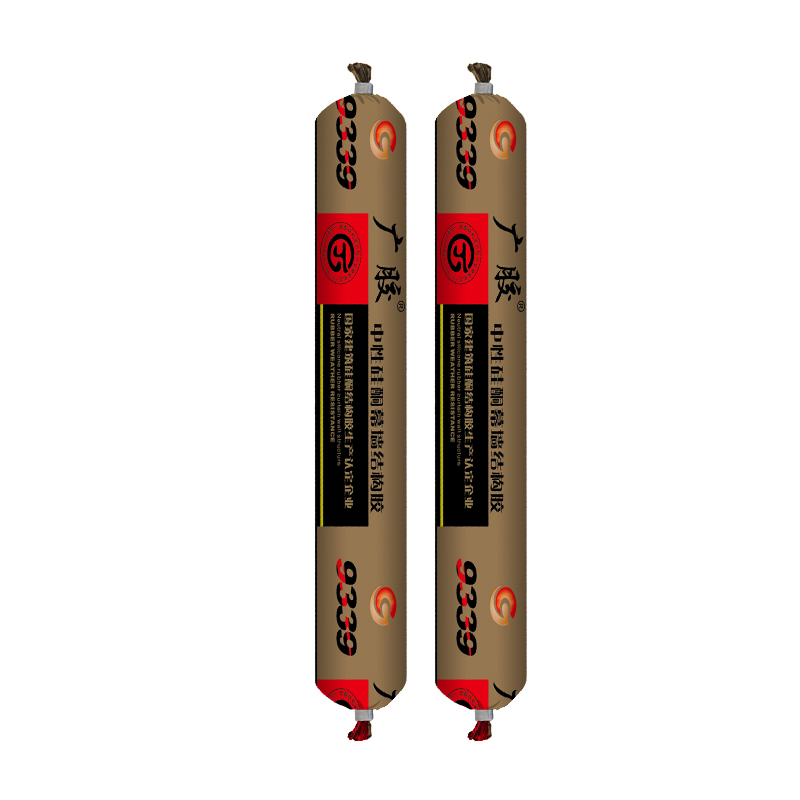
For structural glazing, the 999 neutral silicone curtain wall structural sealant is formulated for load-bearing glass bonds and is used in facades where engineering reviews require documented structural performance.
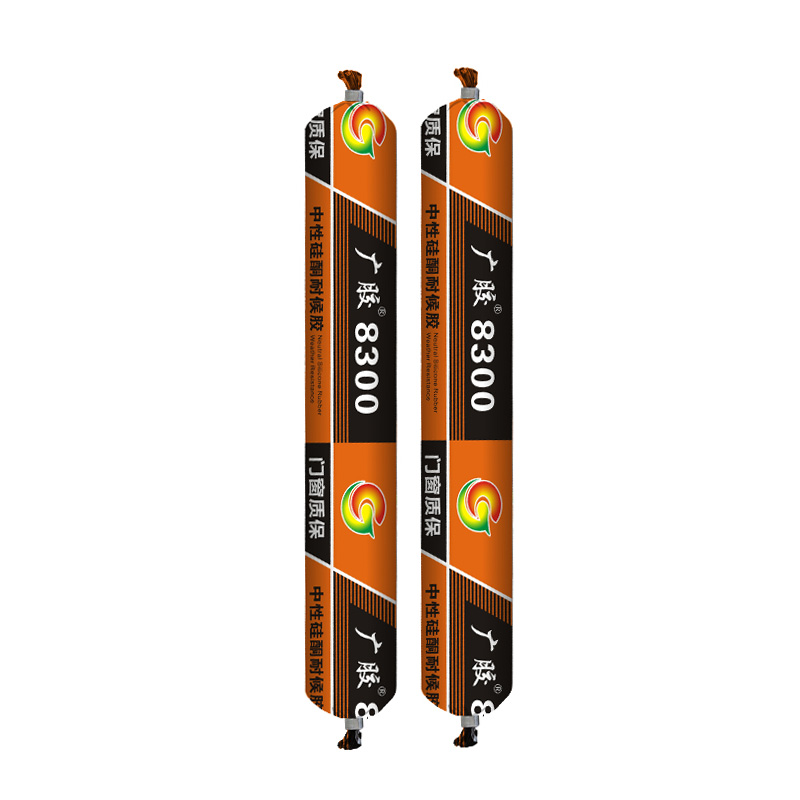
For weatherproofing joints, look for a neutral-cure grade with at least ±25% movement capability and a documented weathering profile. Our guide to choosing a reliable silicone sealant manufacturer explains what to check in test reports, production consistency, and batch traceability.
Not every joint needs a premium UV-resistant grade, but these applications leave no margin for error:
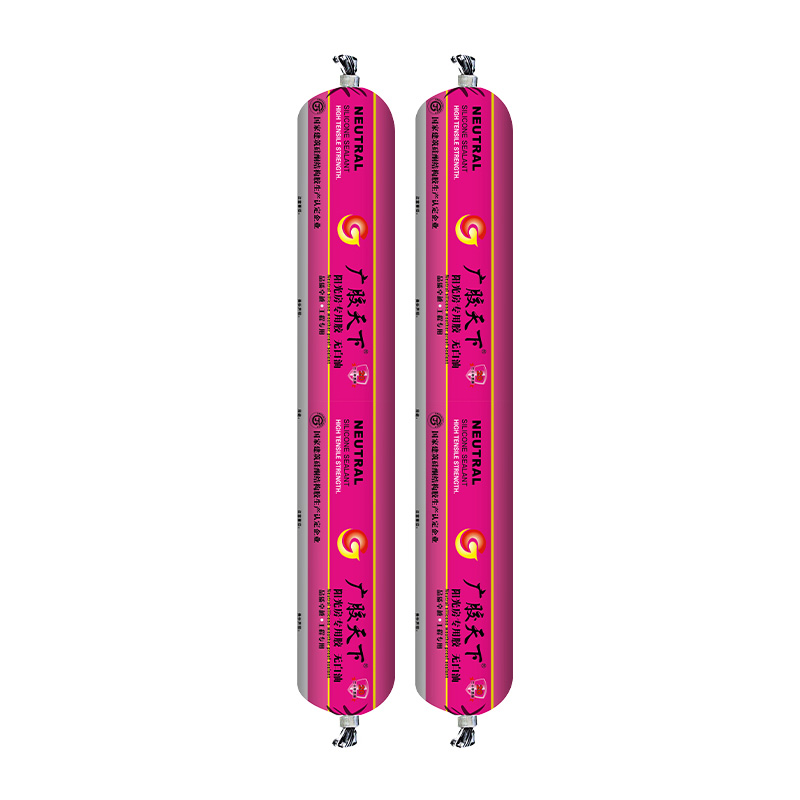
 888 Neutral Cure Weatherproof Silicone Sealant for Curtain WallsThis high-performance neutral silicone sealant is designed for weatherproofing curtain walls, offering strong adhesion and weathering stability for metal, glass, and stone joints in demanding climates.View Product →
For extreme facade duty, the 2000 high-performance silicone weatherproof architectural sealant provides extended weathering resistance for curtain walls, skylights, and large expansion joints.
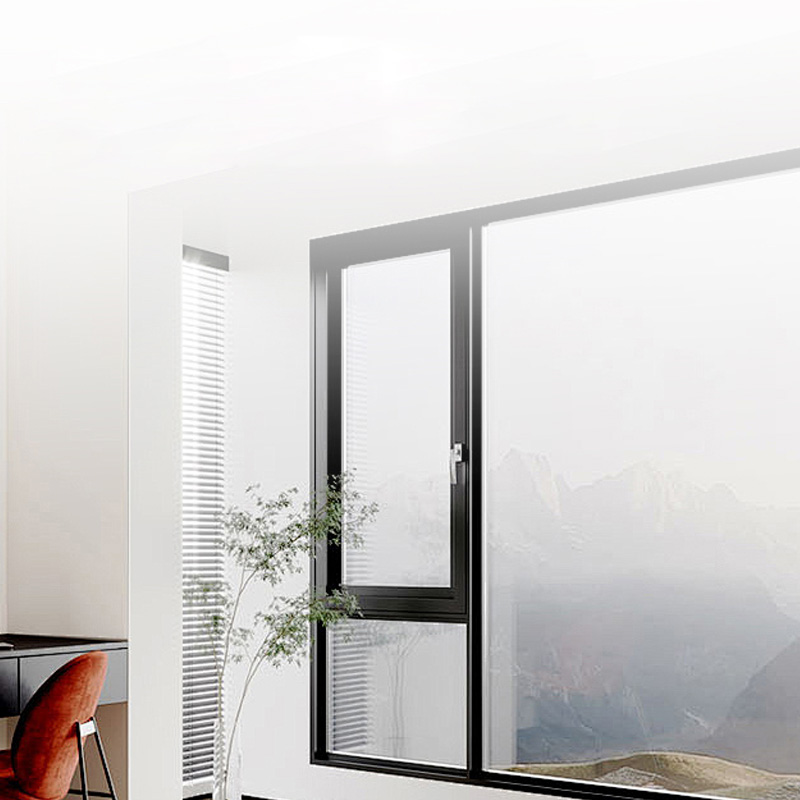 2000 High-Performance Silicone Weatherproof Architectural SealantThis advanced silicone sealant provides extended weathering and aging resistance for extreme facade applications, including curtain walls, skylights, and large expansion joints, where reliability is critical.View Product →
In all of these locations, the price difference between a UV-resistant neutral-cure silicone and a general-purpose sealant is negligible compared with the cost of scaffolding, removal, and re-sealing. For a broader view of how durable weatherproofing supports sustainable building performance, see our article on weatherproof silicone building sealant as a cornerstone of zero-carbon buildings.
Specifying the right product at the start is almost always cheaper than any repair program.
Even a premium UV-resistant sealant fails if the joint detail and installation are wrong. Follow these principles:
A common mistake is specifying a paintable sealant. Most silicone sealants are not paintable, so order a UV-resistant grade in a color that matches the facade instead of planning to paint over it.
No. All silicone has a stable siloxane backbone, but inexpensive formulas with heavy plasticizer loading can chalk, shrink, or lose adhesion within a few years. For exterior joints, choose a neutral-cure weatherproofing grade with a stated service life and documented weathering performance.
A well-formulated neutral-cure weatherproofing grade typically lasts 10–20 years outdoors. Structural glazing grades have demonstrated performance beyond 25 years in curtain wall systems. Actual life depends on climate, joint design, and installation quality.
Acetoxy silicone suits glass-to-glass and glass-to-metal work where corrosion is not a concern, such as aquariums. For outdoor weatherproofing on metal, concrete, or masonry, neutral-cure is safer because it does not release corrosive acetic acid during cure.
It means the cured sealant can be stretched or compressed by 25% of the joint width and still return to its original shape and maintain adhesion. Wider thermal joints require higher movement ratings.
Common methods include accelerated weathering per ASTM G154 (QUV) and ASTM D4587 (xenon arc), plus natural outdoor exposure in Florida or Arizona. ASTM C920 and ISO 11600 also define weathering requirements for construction sealants.
UV resistant silicone is not a marketing label. It is a measurable combination of polymer chemistry, stabilizers, and documented weathering performance. When you specify a neutral-cure weatherproofing or structural grade from a manufacturer with consistent quality control, you buy a 15-to-25-year service life instead of a 3-to-5-year repair cycle.
For building owners, facade contractors, and solar installers, the decision is straightforward: choose a neutral-cure formula designed for UV exposure, verify its movement rating and test evidence, and install it with proper joint preparation.
Subscribe to our newsletter
Product
Quick Links
contact Us
No. 9, 2nd Road, Huicheling Industrial Park, Heping Town, Changxing County, Huzhou City, Zhejiang Province, China
+86-572-6550355
+86-17769681106


 English
 Français
 Español