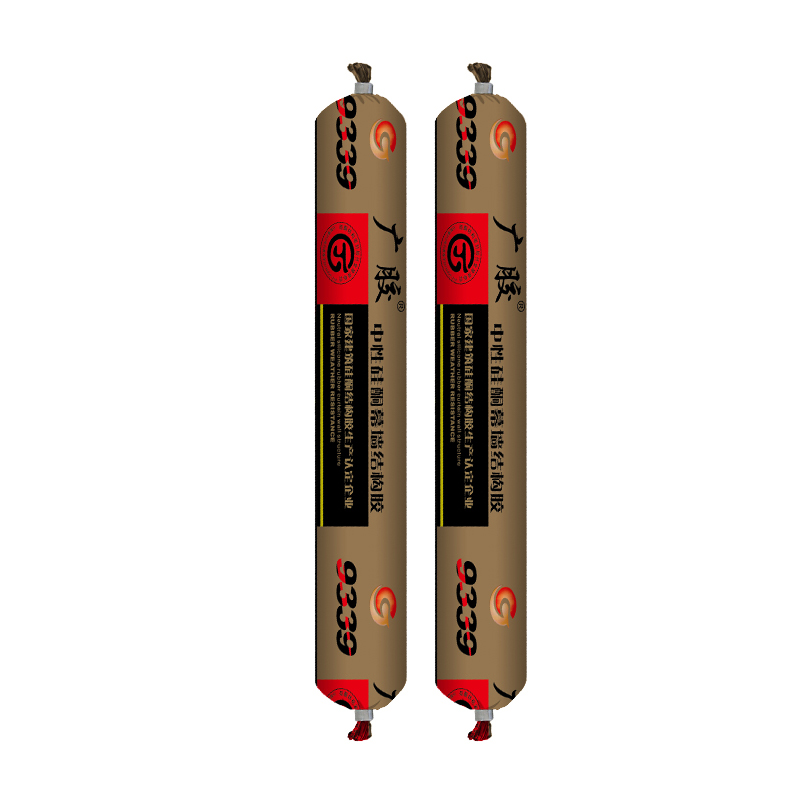
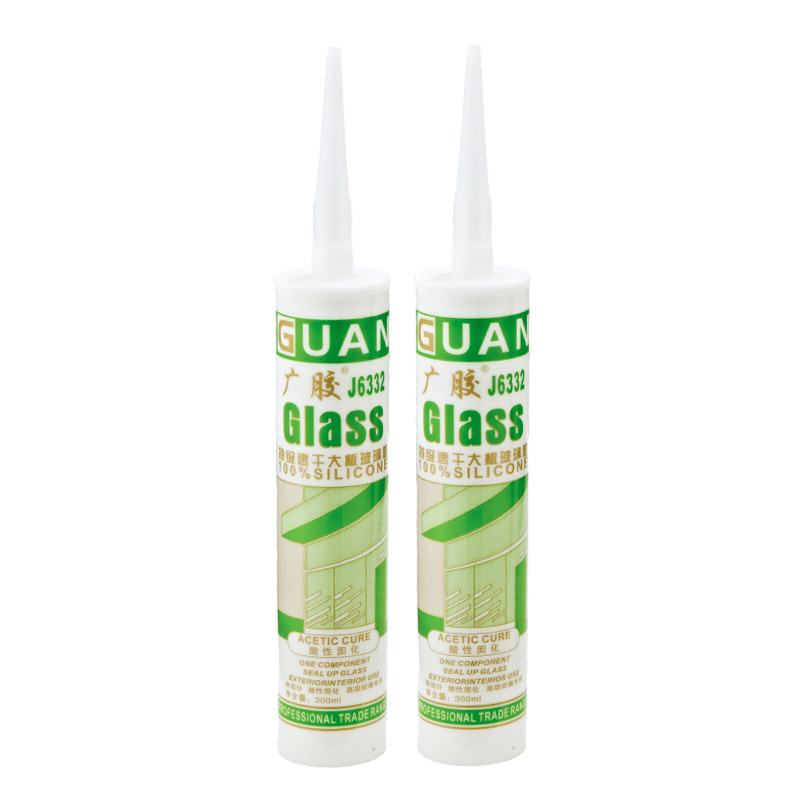
Content
Walk onto any facade installation crew and ask what "non-sag" means, and you will get a dozen half-right answers. Some say it is just a marketing word. Others say it means the sealant is thicker. Neither answer is precise enough to matter on a real jobsite, especially when a crew is sealing a 6 meter vertical mullion joint forty stories above the street.
Non-sag, in technical terms, describes a sealant's ability to resist gravity-driven flow after it is dispensed into a joint and before it cures. A non-sag sealant stays exactly where the gun placed it, holding its tooled profile in a vertical or overhead joint without drooping, dripping, or pulling away from one substrate face. This behavior is governed by a rheological property called thixotropy, and understanding it separates a sealant joint that lasts fifteen years from one that fails within eighteen months.
Quick definition: A non-sag sealant behaves like a stiff paste at rest but flows easily under the shear force of a caulking gun or trowel. Once that force is removed, it stiffens again almost instantly.
A common mistake among specifiers is assuming that a "thick" sealant is automatically non-sag. Viscosity measured at rest tells you almost nothing about how a material behaves once it is disturbed. What actually matters is shear-thinning behavior: the material's viscosity must drop sharply while being extruded through a nozzle, then recover just as sharply once extrusion stops.
Think of it like ketchup in a glass bottle. At rest, ketchup barely moves even when the bottle is tilted. Shake it or squeeze it, and it suddenly flows freely. The moment you stop applying force, it thickens again. Silicone sealants formulated for vertical and overhead joints are engineered to do exactly this, using fumed silica or other thixotropic additives dispersed through the polymer base.
If the recovery phase is too slow, the bead sags before it sets. If it is too fast, tooling becomes difficult and the surface finish suffers. Formulation balance between these two extremes is what separates a well-engineered vertical joint sealant from a generic all-purpose product.
The diagram below illustrates how a properly formulated non-sag sealant holds its tooled profile in a vertical joint compared to a sealant lacking adequate thixotropic structure.
Horizontal joints, such as those in a paved plaza or a roof deck, are supported from below by gravity itself. The sealant sits in the joint the same way water sits in a cup. Vertical and overhead joints have no such support. Every millimeter of bead width is fighting gravity from the moment it leaves the nozzle until the moment it fully cures.
This is precisely why standard general-purpose sealants, even ones that perform adequately in a floor joint, are unsuitable for a curtain wall mullion or a precast panel joint on a building facade. A sealant that slowly creeps downward over several hours will leave a thin section near the top of the joint and a bulging, uneven bead near the bottom. That thin section becomes the first point of adhesive or cohesive failure once thermal cycling begins.
Specifiers and installers rarely see the test methods behind a non-sag rating, but understanding the general principle helps explain why some products perform reliably in tall installations while others do not.
The typical evaluation method involves extruding a sealant bead into a vertical or inclined test joint of a defined depth and width, then measuring how far the material moves or deforms under its own weight over a set period, usually under standard laboratory temperature. A material is classified as non-sag when its downward displacement stays within an established tolerance, often just a few millimeters, over the observation period.
| Characteristic | Non-Sag (Type N) Sealant | Self-Leveling (Type S) Sealant |
|---|---|---|
| Intended joint orientation | Vertical and overhead | Horizontal |
| At-rest viscosity behavior | Thick paste, holds shape | Flows to a level surface |
| Tooling requirement | Manual tooling typically needed | Self-levels without tooling |
| Typical use case | Curtain wall and panel joints | Pavement and deck joints |
| Risk if misapplied | Pooling, uneven surface if used horizontally | Dripping, sagging if used vertically |
Two general-purpose neutral cure silicone formulations illustrate how thixotropic engineering is applied differently depending on the joint's structural role.
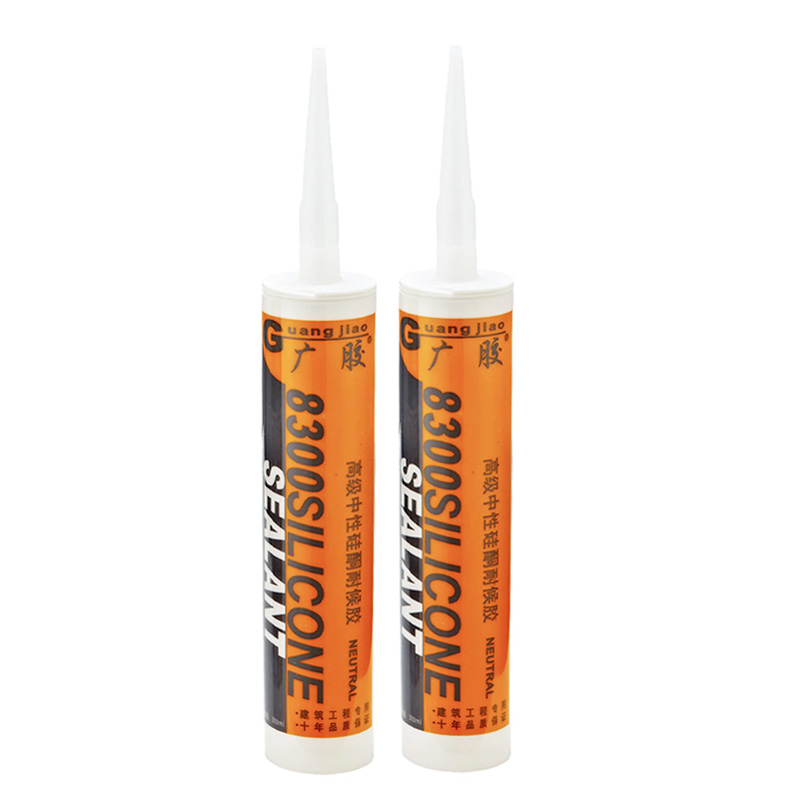
A weatherproofing sealant intended for building envelope joints, such as the 8300 High-Grade Neutral Silicone Joint Sealant, is formulated primarily for movement accommodation and weather sealing across expansion joints, panel joints, and perimeter details. Its thixotropic index is tuned to hold a tooled bead in vertical orientations while remaining workable enough for hand tooling in field conditions across a range of ambient temperatures.
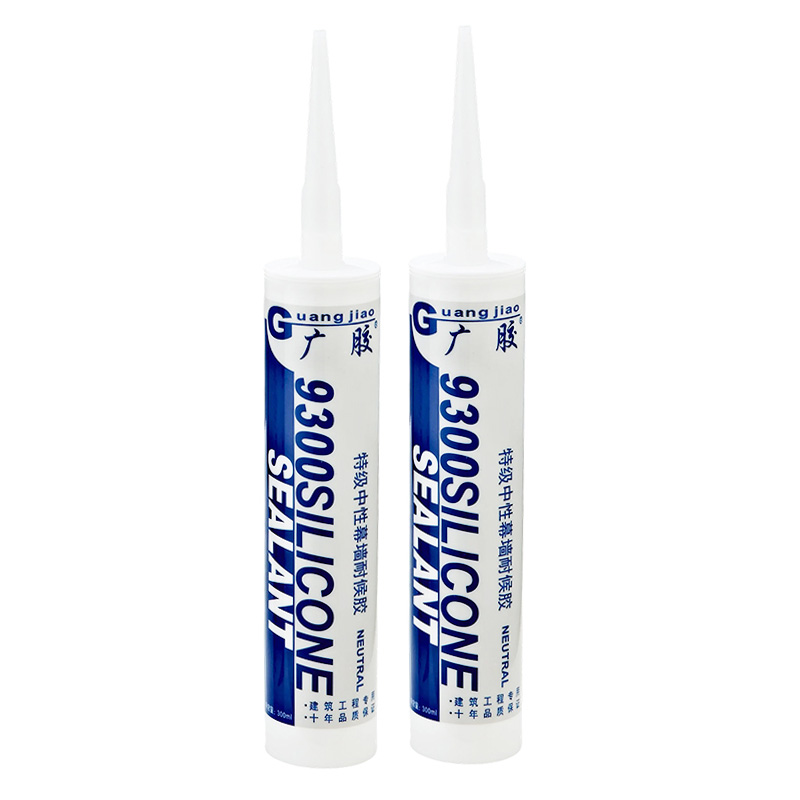
A structural glazing sealant, such as the 9300 Premium Neutral Structural Glazing Weatherproof Sealant, carries an added requirement beyond weatherproofing: it must maintain dimensional stability while curing in place as a structural adhesive holding glass to a metal frame, often applied in a vertical or overhead orientation during installation. Non-sag behavior here is not a convenience feature; it is essential to keeping the uncured bead centered and uniform in thickness while the glazing unit is held in position, since an uneven bead thickness can create stress concentrations once the sealant cures and begins carrying structural load.
On one mid-rise curtain wall retrofit, crews reported that switching from a general caulking-grade sealant to a properly rated non-sag structural formulation eliminated the uneven bead thickness that had been causing early bond line cracking at glass corners, without any change to the joint design itself.
Getting the material right is only half the equation. Application technique has a measurable effect on whether even a properly rated non-sag sealant performs as intended.
Ambient and substrate temperature both influence how a thixotropic sealant behaves during application. In hotter conditions, the material's at-rest viscosity typically drops slightly, which can make an otherwise well-rated non-sag product feel softer and more prone to minor slump if the joint depth is oversized. In cold conditions, the same material becomes stiffer and can be harder to tool cleanly. This is why manufacturer application temperature ranges should be treated as a hard boundary rather than a suggestion, particularly on tall facade work where a crew may be applying sealant late in the day as temperatures drop.
Understanding the additive science behind a non-sag sealant helps explain why not all products labeled "vertical grade" behave the same way once they leave the nozzle. The base silicone polymer on its own tends to flow relatively freely, similar to a viscous oil. To turn that base polymer into a material that can hold a vertical bead shape, formulators disperse fine particulate fillers through the polymer network before the product is packaged.
These fillers form a loose, interlocking network at rest, similar in concept to a house of cards. That network gives the uncured sealant its resistance to gravity. When shear force from a caulking gun is applied, the network temporarily breaks apart, letting the material flow smoothly through the nozzle. The moment the shear force stops, the particles reassemble into their interlocking structure within seconds, restoring the paste-like resistance to movement.
This is also why proper storage and stock rotation matter on a jobsite. A cartridge that has sat in a hot delivery truck for weeks before installation may not perform to its rated slump resistance, even though the underlying formulation was correct at the time of manufacture.
Specifiers and procurement teams juggling multiple joint types across a single project benefit from a simple decision framework rather than relying on marketing language printed on a cartridge label.
Practical tip: When in doubt about joint orientation performance, request the non-sag test data from the supplier rather than relying solely on the word "non-sag" printed on the packaging, since testing methods and tolerance thresholds can vary between manufacturers.
Even a correctly selected and properly applied non-sag sealant benefits from a structured inspection process, both immediately after installation and periodically throughout the building's service life.
Within the first few hours after tooling, installers can visually confirm that the bead has not begun to slump or pull away from either substrate face. A properly formulated non-sag sealant should show a crisp, uniform tooled line with no visible drooping at the bottom of the joint run. Any early sagging observed at this stage typically points to either an oversized joint depth, an unusually high ambient temperature during application, or a product that was not rated for the orientation used.
Building maintenance programs typically schedule a visual sealant inspection on a multi-year cycle, checking for signs of adhesive failure at the bond line, cohesive splitting within the sealant bead itself, or discoloration that may indicate substrate contamination. Because vertical and overhead joints are constantly working against gravity even after full cure, any adhesion loss at the top of a joint run tends to progress faster than a similar defect in a horizontal application, making early detection especially valuable in facade maintenance planning.
| Inspection Stage | What to Check | Why It Matters |
|---|---|---|
| Within 24 hours | Bead shape, slump, tooling finish | Confirms correct product selection and application technique |
| 3 to 6 months | Early adhesion at joint edges | Detects substrate compatibility issues before they spread |
| Annual review | Cracking, chalking, bond line separation | Identifies weathering effects before water intrusion occurs |
| 5 year cycle | Full facade sealant condition survey | Supports long-term maintenance and replacement budgeting |
| Mistake | Consequence | Prevention |
|---|---|---|
| Oversized joint depth | Bead has more mass to support against gravity, increasing sag risk | Use backer rod to control depth-to-width ratio |
| Applying in direct high heat | Reduced at-rest viscosity leads to slow creep | Schedule application during cooler parts of the day |
| Excessive tooling pressure | Disrupts thixotropic structure before recovery completes | Use light, single-pass tooling strokes |
| Using a horizontal-grade sealant vertically | Material was never formulated for slump resistance and will sag | Confirm product classification before ordering |
| Dispensing in short, stop-start bursts | Uneven recovery creates weak points along the bead | Maintain a steady, continuous dispensing motion |
Non-sag sealants can generally still be applied to horizontal joints, but doing so is often unnecessary and can make tooling more labor-intensive since the material will not self-level the way a horizontal-grade sealant does.
Initial slump resistance typically develops within minutes of tooling as the surface skin forms, though full cure and complete resistance to any deformation can take several days depending on ambient humidity and temperature.
Yes. Even a correctly formulated non-sag sealant has practical limits. If a joint is significantly oversized in depth, the added mass of material can overwhelm the thixotropic structure, which is why backer rod and correct joint proportions matter as much as product selection.
No. Thixotropic behavior only matters during the uncured, workable phase of the sealant. Once the material fully cures, it becomes a solid elastomer and the concept of sag resistance no longer applies in the same way.
Failures in vertical joints are frequently traced back to application technique, incorrect joint dimensions, contamination of the substrate surface, or exposure to temperatures outside the manufacturer's recommended application range, rather than the sealant's rheology itself.
Yes. Cartridges or sausages stored in extreme heat for extended periods can experience changes to the filler network that governs slump resistance, so following the manufacturer's recommended storage temperature range and rotating stock on a first-in, first-out basis helps preserve rated performance.
Color pigments are typically added in small proportions relative to the filler system that controls thixotropy, so a properly formulated colored version should retain equivalent non-sag performance, though it remains good practice to confirm this with the specific product's technical data rather than assuming it by default.
Subscribe to our newsletter
Product
Quick Links
contact Us
No. 9, 2nd Road, Huicheling Industrial Park, Heping Town, Changxing County, Huzhou City, Zhejiang Province, China
+86-572-6550355
+86-17769681106


 English
 Français
 Español