Content
A solar panel is rarely destroyed by the sun that powers it. More often, failure begins at the edges: the frame seam, the junction box lid, the cable gland, the sensor housing. These are the points where two dissimilar materials meet, and where a bonding and sealing compound is asked to do work that the glass, the aluminum, and the polymer backsheet cannot do alone. Outdoor installations cycle through temperature swings that can exceed sixty degrees Celsius between night and day, absorb direct ultraviolet radiation for a decade or more, and endure repeated condensation, wind-driven rain, and in many regions, salt spray or industrial pollutants.
A general-purpose adhesive or a construction-grade caulk was never engineered for this combination of stresses acting simultaneously and continuously. This is why the solar industry has converged on a narrower category of materials, broadly grouped under silicone adhesive and polymer adhesive sealant systems, formulated specifically for outdoor electrical and structural bonding. This article looks at what separates these purpose-built compounds from ordinary sealants, where they are applied within a panel assembly, and how installers and manufacturers can evaluate them on technical rather than marketing grounds.
Most general adhesives are formulated for indoor use, moderate temperature ranges, and short-term exposure to moisture. When these products are used on outdoor electrical equipment, three failure patterns tend to appear within the first eighteen to thirty-six months of service:
Because a junction box houses the bypass diodes and the positive and negative output terminals, moisture ingress at this single point can compromise an entire string of panels, not just one module. This is one reason the sealant specification for this component tends to be stricter than for almost any other part of the assembly.
| Stress Factor | Approximate Exposure |
|---|---|
| Temperature range | Negative 40 to positive 90 degrees Celsius |
| UV exposure | Continuous, 20 to 30 year design life |
| Humidity cycling | Daily condensation in most climates |
| Mechanical stress | Wind load, thermal expansion, handling |
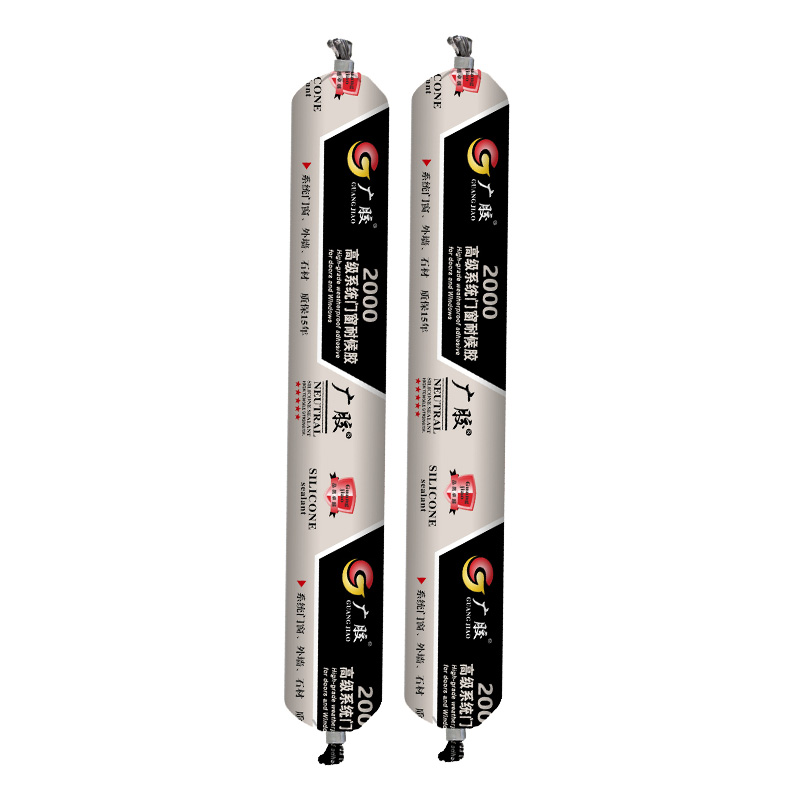
The term used across the industry for this class of material is photovoltaic silica gel, a room-temperature or heat-cure silicone compound designed to bond, seal, and electrically insulate components within a solar module or its enclosure hardware. Unlike a general silicone caulk, it is formulated around a specific set of performance targets that map directly to the failure modes described above.
Many formulations in this category are supplied as clear silicone or clear silicon products, partly for aesthetic reasons on visible seams and partly because a clear cure allows a visual inspection of bond integrity without disassembly. A clean, bubble-free, evenly colored cure line is one of the simplest field indicators that an application was done correctly and that the material has not begun to degrade.
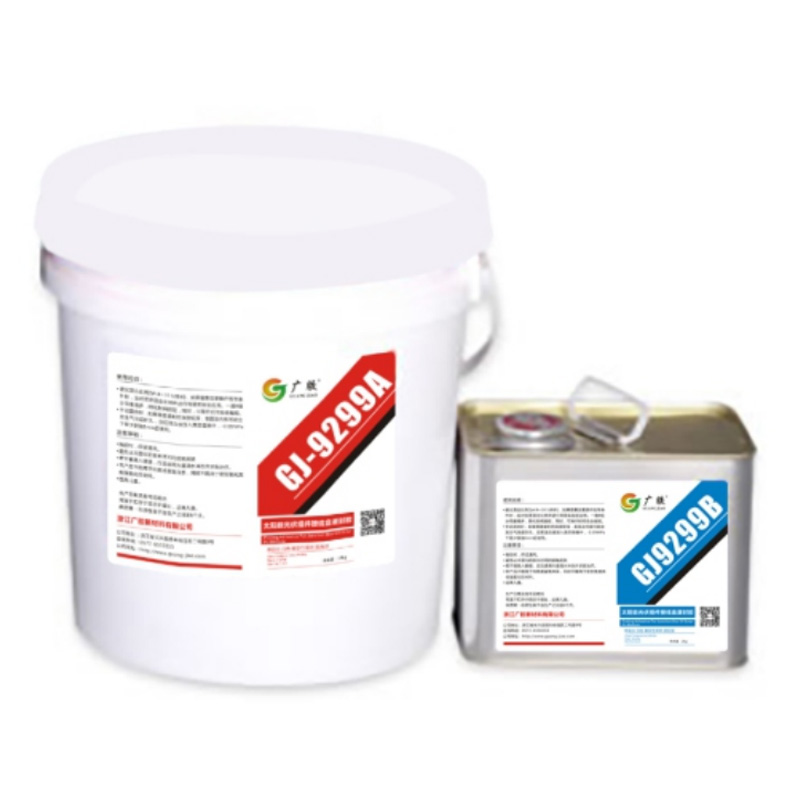
The junction box is the electrical exit point of a solar module, and it is also one of the most mechanically vulnerable. It is typically bonded to the backsheet with a bead of sealant around its perimeter, and its lid is either sealed with a gasket, an adhesive bead, or both. A product marketed as a Solar Panel Assembly Junction Box Can Silicone Sealant is formulated with this specific joint in mind, balancing three requirements that are sometimes in tension with one another: strong adhesion to the box housing material, a cure profile compatible with the backsheet without causing delamination, and long-term flexibility so that repeated thermal cycling does not open a leak path at the seam.
| Location | Primary Risk if Poorly Sealed |
|---|---|
| Box-to-backsheet perimeter | Water tracking under the box, corrosion of solder joints |
| Lid gasket line | Condensation pooling inside the enclosure |
| Cable entry gland | Capillary moisture ingress along the conductor |
| Diode potting cavity | Arcing or thermal runaway under load |
Field data collected across long-running installations consistently shows that a disproportionate share of underperforming or failed strings can be traced back to moisture at the junction box rather than to the photovoltaic cells themselves. This makes the sealant choice at this single joint one of the higher-leverage decisions in the entire assembly process.
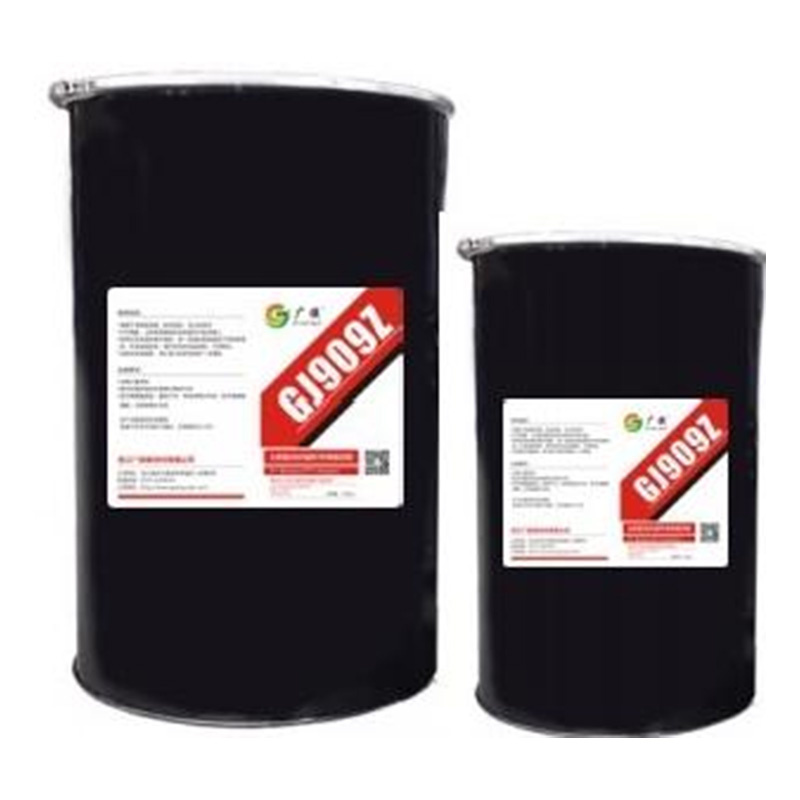
Beyond the junction box, a modern solar installation includes a growing number of smaller components that each need their own sealing strategy: frame corner joints, mounting bracket interfaces, MC-style connectors, string-level sensors, and in some designs, integrated microinverters or optimizers mounted directly on the module. A Silicone Sealant for Solar Panel Component application typically differs from junction box sealing in bead size, cure speed, and sometimes viscosity, since these joints are often smaller, more numerous, and applied at higher line speeds during manufacturing.
Because these components are produced and installed at scale, manufacturers also weigh cure speed and dispensing behavior alongside long-term performance. A compound that cures too slowly can bottleneck an assembly line; one that skins over too quickly can create adhesion problems if the two surfaces are not joined within the working window.
Not every silicone product sold as an outdoor sealant is suited to photovoltaic work. The table below compares broad categories often considered for solar assembly and maintenance, without reference to any specific brand or manufacturer.
| Sealant Category | UV Resistance | Electrical Insulation | Typical Use in PV Assembly |
|---|---|---|---|
| General construction silicone | Moderate | Not rated | Not recommended for junction boxes or connectors |
| Neutral-cure PV grade silicone | High | Rated for low-voltage DC circuits | Junction box, frame seams, connector housings |
| Two-part potting silicone | High | High, full encapsulation | Diode cavities, sensor circuits, connector backfill |
| Acetic-cure general silicone | Moderate to low | Not rated | Avoid near metal contacts due to corrosive cure byproducts |
The distinction between neutral-cure and acetic-cure chemistry is worth highlighting on its own. Acetic-cure silicones release a byproduct during curing that can be mildly corrosive to certain metals, which is undesirable near copper terminals, solder joints, or plated connectors. This is one of the clearer, non-negotiable filters when screening a renewable energy silicone product for use anywhere near live electrical contacts.
Even a well-formulated sealant will underperform if it is applied incorrectly. The sequence below reflects common practice across module assembly lines and field installation crews for both a solar junction box adhesive and a general PV module sealant application.
A seal is only as strong as its weakest inch. Uniform bead geometry and clean substrate preparation typically matter more to long-term performance than the marginal difference between two otherwise comparable sealant formulations.
Because a sealing failure in the field is expensive to diagnose and even more expensive to remediate on an installed array, quality control for these materials tends to focus on accelerated aging rather than relying only on short-term adhesion checks.
Thermal cycling repeatedly moves a bonded sample between temperature extremes to reveal fatigue cracking that would take years to appear under normal outdoor conditions. Damp heat exposure, often run for many hundreds of hours at elevated temperature and humidity, is used to check whether adhesion holds up under sustained moisture pressure rather than brief exposure. Dielectric strength testing confirms that the cured material still functions as an electrical insulator after aging, which is particularly relevant for sealants used near diode cavities or live terminals.
For installers and procurement teams without in-house lab access, requesting test reports covering these categories, along with a clear data sheet listing cure time, working time, and service temperature range, is a reasonable minimum bar before specifying a product for a commercial-scale project.
Sealant cost is a small fraction of total module or installation cost, yet a poor sealant choice can be responsible for a disproportionate share of warranty claims and truck rolls over a system's service life. A useful way to frame this trade-off is to compare the incremental material cost of a properly rated sealant against the labor and downtime cost of a single field repair.
| Cost Factor | Undersized or Wrong Sealant | Properly Specified Sealant |
|---|---|---|
| Material cost per module | Lower | Marginally higher |
| Field failure rate | Higher, especially after year 2 to 3 | Lower, aligned with module warranty period |
| Repair labor | Significant, often requires site access | Minimal over rated service life |
| Warranty exposure | Higher | Lower |
Given that most module warranties now extend to twenty-five years or longer, the sealant should reasonably be expected to remain functional across a comparable service window, even though it will never be inspected as often as the electrical components it protects.
A general silicone sealant is formulated for broad construction or household use, while a photovoltaic-grade product is engineered around the specific combination of prolonged UV exposure, wide temperature swings, and proximity to live electrical circuits found in a solar module.
In many cases a neutral-cure PV grade silicone can be used across both areas, but junction box sealing near live terminals typically calls for a product with confirmed electrical insulation ratings, while frame sealing places more weight on adhesion and weather resistance.
Acetic-cure silicones release a byproduct during curing that can be mildly corrosive to certain metals, so neutral-cure formulations are generally preferred near copper terminals, solder joints, or plated connectors.
A correctly specified and applied sealant is generally expected to remain functional for a service life comparable to the module warranty period, often twenty-five years or more, assuming correct surface preparation and application.
Most failures trace back to application error rather than the material itself, including inadequate surface cleaning, discontinuous bead application, or assembling parts after the sealant has already begun to skin over.
Clear silicone is commonly used because it allows a visual bond-line inspection without disassembly, but the decision should still be based primarily on adhesion, UV resistance, and electrical insulation data rather than appearance alone.
Subscribe to our newsletter
Product
Quick Links
contact Us
No. 9, 2nd Road, Huicheling Industrial Park, Heping Town, Changxing County, Huzhou City, Zhejiang Province, China
+86-572-6550355
+86-17769681106


 English
 Français
 Español