Content
On a curtain-wall installation site, the material list often includes a line item that reads "100 silicone adhesive." For glazing contractors and project managers, this raises a practical question: what does a true 100% silicone adhesive actually deliver, and where can it be trusted?
The short answer is that a true 100% silicone adhesive is a solvent-free elastomeric system that cures into a flexible rubber. It withstands UV, rain, and thermal cycling far better than many hybrid sealants, making it the default choice for structural glazing, weatherproof building joints, and photovoltaic module assembly.
"100 silicone adhesive" is shorthand for a silicone rubber formulation that contains no significant amount of non-silicone polymer or plasticizer. Unlike some general-purpose sealants that blend silicone with polyurethane or acrylic, a 100% silicone product relies entirely on the polydimethylsiloxane (PDMS) backbone for its strength, elasticity, and chemical stability.
For specifiers, the critical takeaway is this: 100% silicone adhesive means the chemical family is silicone, but the exact formulation still varies widely. That is why you should always check the product data sheet for elongation, tensile strength, movement capacity, and UV stability before making a comparison.
The value of a 100% silicone adhesive lies in a narrow set of measurable properties. These determine whether the product will survive 20 years of sun, rain, and thermal cycling.
Silicone chemistry is inherently resistant to ultraviolet radiation. A 100% silicone adhesive will not yellow or chalk significantly over decades of outdoor exposure, which is why it is standard for curtain-wall joints, glazing, and facade sealing.
A typical 100% silicone construction sealant can accommodate +/-25% to +/-50% joint movement. Acrylic sealants usually handle +/-5% to +/-10%, and polyurethane generally sits in the +/-25% range. The ability to stretch and recover without losing adhesion is the main reason silicone is specified for high-rise building facades.
Most 100% silicone adhesives perform continuously from -40 degrees C to +150 degrees C or higher, with special formulations reaching +250 degrees C. This thermal stability makes silicone suitable for both cold-storage facilities and industrial equipment with heat exposure.
Silicone can bond to glass, aluminum, steel, painted surfaces, many plastics, and ceramics. The surface must be clean and dry. When bonding to porous substrates such as concrete, a primer is often required.
Within the 100% silicone family, the cure mechanism matters just as much as the silicone content. Two major systems dominate the market.
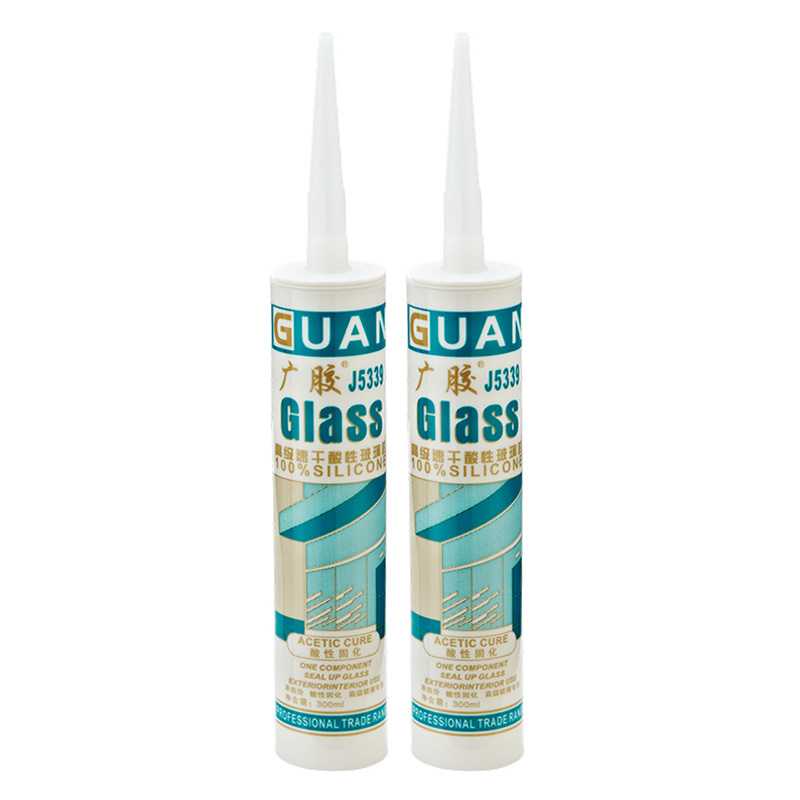
Acetoxy-cured silicone releases acetic acid during curing. It bonds well to glass and ceramic, cures quickly, and is typically the least expensive option. However, the acidic byproduct can corrode metals such as zinc, aluminum, and copper, and it may cause staining on some stones. Acid-cure formulas are common for fish tanks, glass-to-glass assembly, and quick interior glazing jobs.
Neutral-cure silicone does not release acid. It is compatible with metals, concrete, coated glass, and many plastics. It also emits a milder odor and is widely used in structural glazing, curtain walls, and photovoltaic module assembly. The trade-off is that neutral-cure products often require a slightly longer initial set time and cost a little more.
| Feature | Acid-Cure Silicone | Neutral-Cure Silicone |
|---|---|---|
| Cure byproduct | Acetic acid | Alcohol or amine |
| Metal compatibility | Poor | Excellent |
| Best for | Glass, fish tanks, interior glazing | Curtain walls, metal, PV, structural glazing |
| Odor | Strong | Mild |
| Typical full cure | 2 to 3 days | 3 to 5 days |
The cure chemistry determines where a 100% silicone adhesive can be safely used. Once that foundation is set, the next question is how to choose the right product from the many options available.
The real value of 100% silicone adhesive shows up when you match the formulation to the application. Here are three demanding scenarios and the products that are engineered for them.
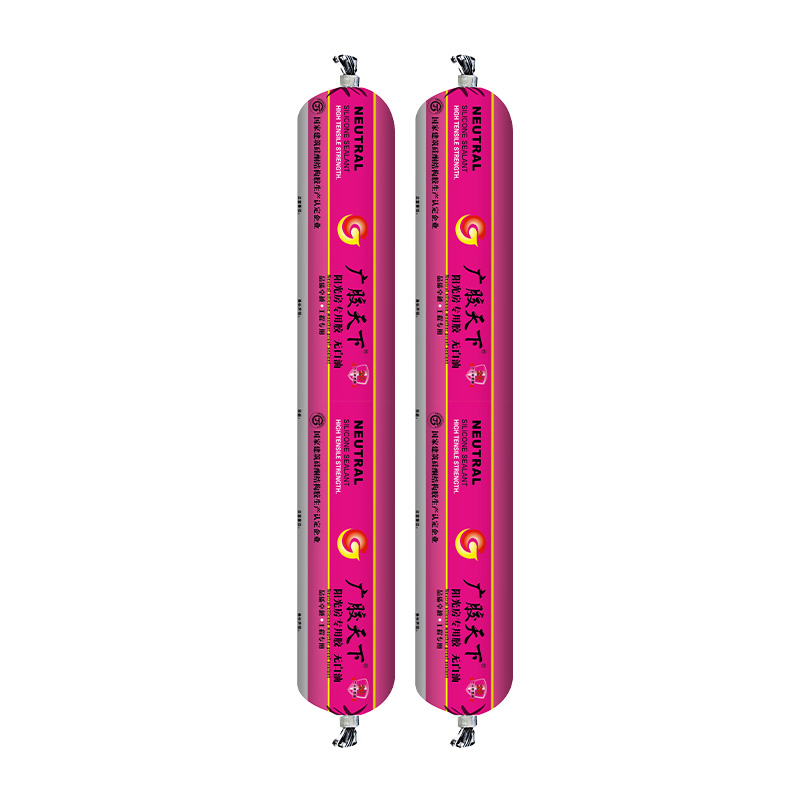
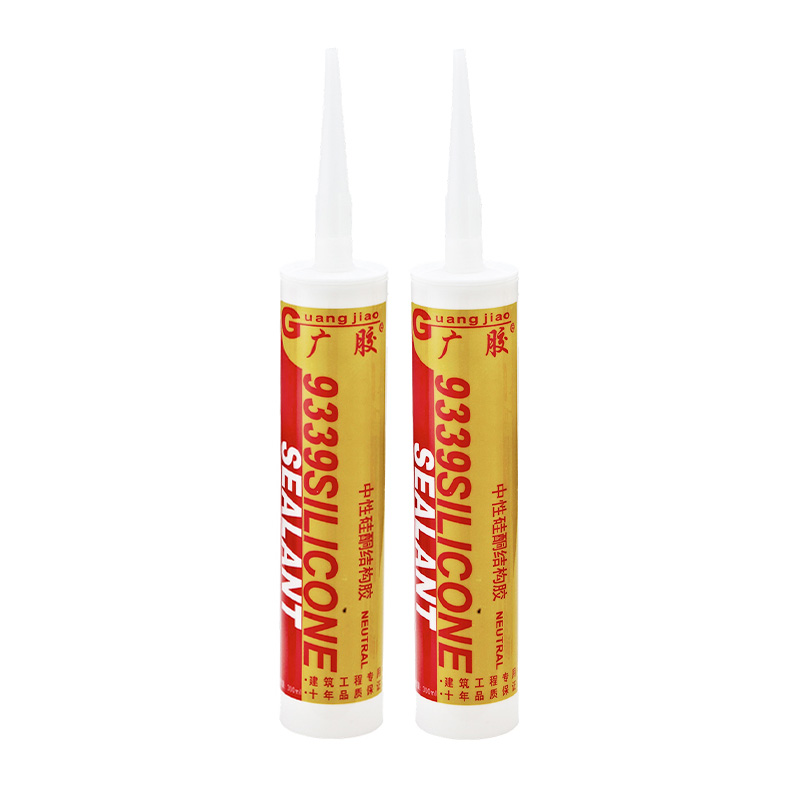
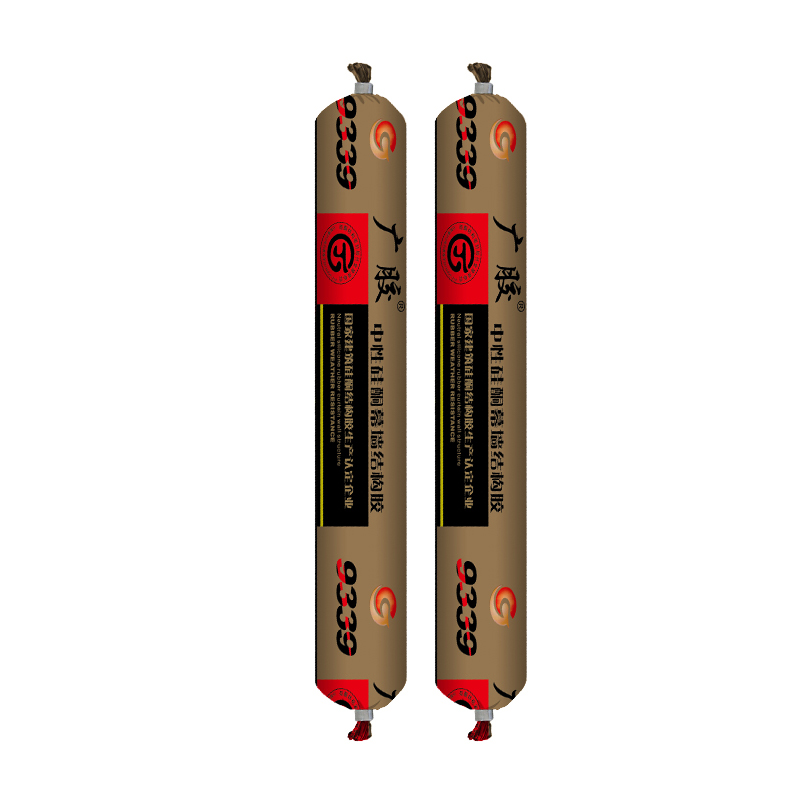
In high-rise curtain walls, the adhesive is doing more than filling a gap. It is transferring wind loads and seismic movement between the glass and the frame. A structural neutral silicone sealant such as the 999 neutral silicone curtain wall structural sealant is formulated specifically for this job, with high tensile strength and shear adhesion that meet the safety requirements of modern facades.
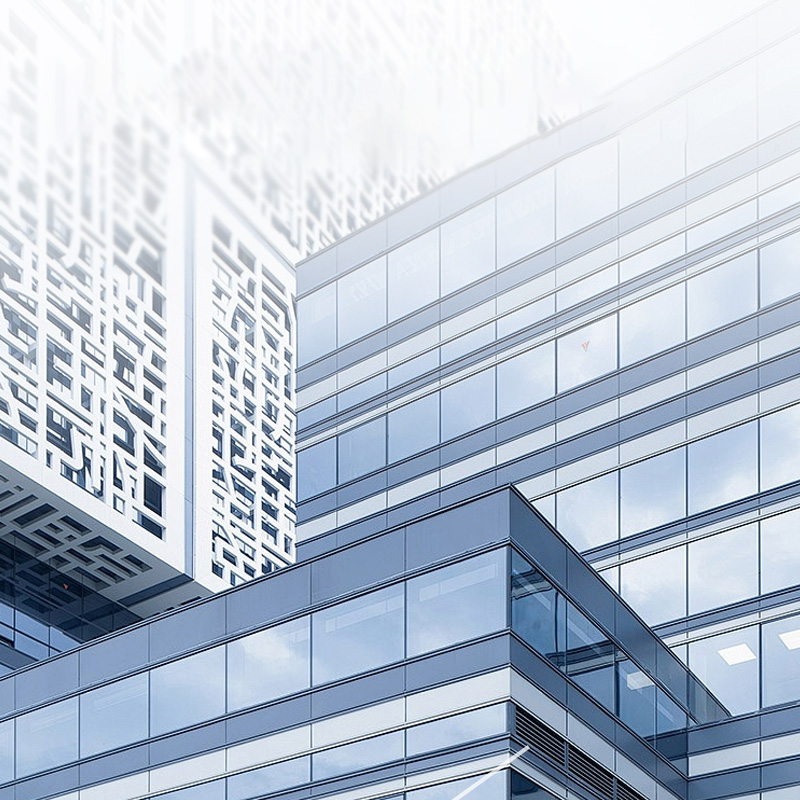 Neutral Silicone Structural Sealant for Curtain Wall GlazingDesigned for high-rise curtain walls, this sealant transfers wind loads and seismic movement between glass and frame with high tensile strength and shear adhesion, ensuring facade safety.View Product →
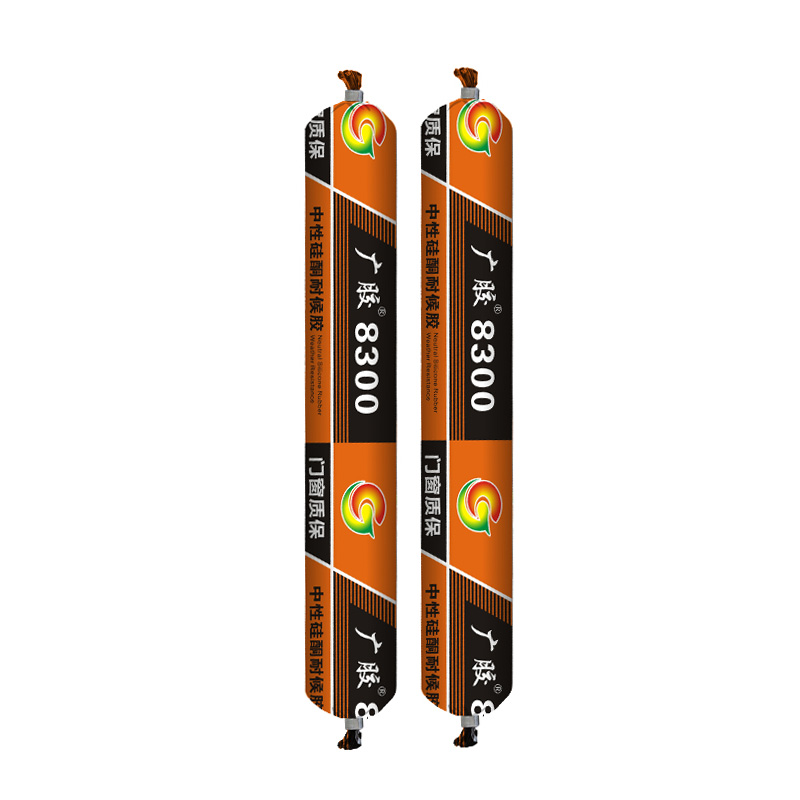
For joints that must withstand UV exposure, rain, and thermal cycling, a weatherproof architectural sealant is the standard choice. The 2000 high-performance weatherproof architectural sealant provides the elasticity and UV resistance that project managers need when sealing expansion joints in concrete, stone, and metal panel facades.
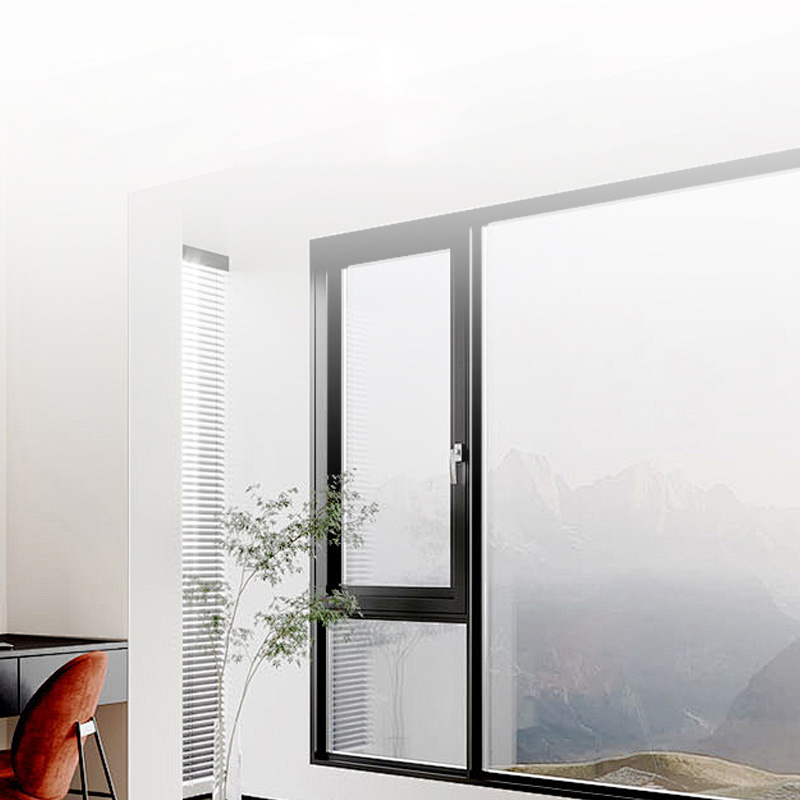 High-Performance Weatherproof Silicone Sealant for Architectural JointsWith UV resistance and elasticity, this sealant handles expansion joints in concrete, stone, and metal panel facades, withstanding rain and thermal cycling for durable performance.View Product →
In photovoltaic modules, a 100% silicone adhesive bonds the frame, the glass, and the junction box. It must tolerate decades of UV and temperature swings. The silicone sealant for solar panel components is designed for this environment, offering electrical insulation and reliable adhesion to the frame and backsheet materials.
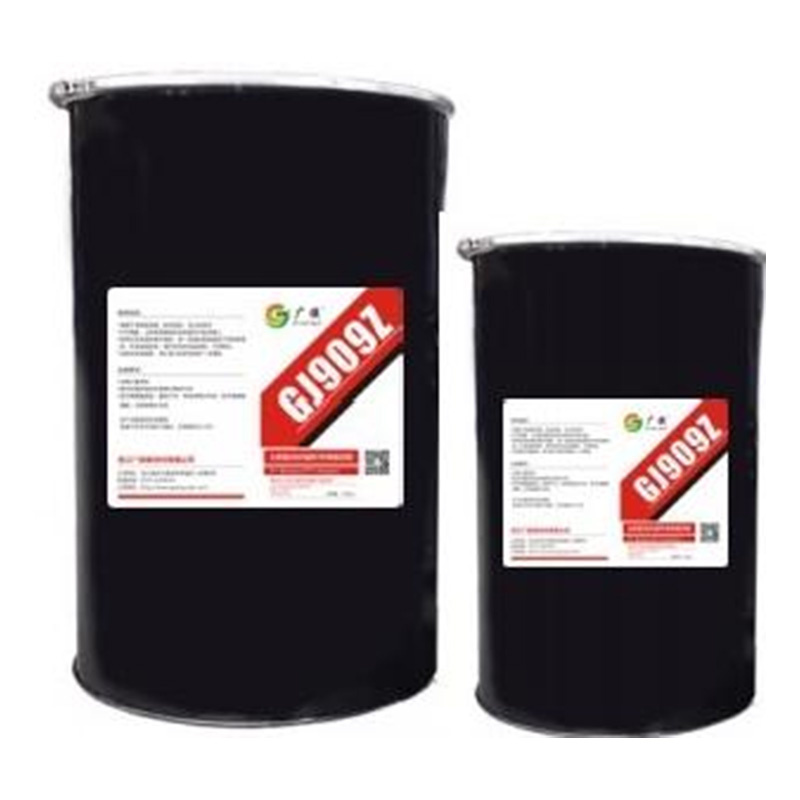 Silicone Sealant for Solar Panel Frame and Component BondingProviding electrical insulation and reliable adhesion to aluminum frames and backsheets, this sealant endures UV and temperature swings, protecting photovoltaic modules from damage.View Product →
Selection is not guesswork. It is a short checklist of parameters that can be verified from a technical data sheet.
If you are sourcing for multiple applications, it is worth building a small approved list of two or three 100% silicone adhesives that cover your glazing, weatherproofing, and industrial needs. This simplifies inspection and avoids accidental substitution of an acid-cure product where a neutral-cure product is required.
Cleaning the joint surface is the single biggest factor in adhesive failure. Anything that you can remove with alcohol or a mild solvent should be removed before applying silicone. Follow the steps below to get a lasting bond.
For more detailed field handling, refer to our article on how to apply and cure silicone sealants.
In most practical contexts, the terms are used interchangeably. A sealant is designed to fill and weatherproof gaps, while an adhesive is often formulated for higher bonding strength. However, a 100% silicone adhesive can also be used as a sealant, and many structural silicones are advertised as sealant-adhesive hybrids. The key is to look at the data sheet for tensile and shear strength rather than the label.
It bonds well to glass, aluminum, steel, ceramics, many plastics, and coated wood. Concrete and stone usually require a primer. Powder-coated metals may also need a solvent wipe or primer depending on the coating chemistry.
Surface tack-free time is typically 30 to 60 minutes for neutral-cure products. Full cure to serviceable strength takes 24 hours to 5 days depending on thickness, temperature, and humidity. Thick beads always take longer, and cooler weather slows the cure.
Yes. Outdoor weather resistance is one of its strongest advantages. A quality 100% silicone formulation will withstand UV, rain, ozone, and temperature extremes for 20 years or more. For maximum longevity, specify a product rated for weatherproof building joints.
Check the technical data sheet for the silicone polymer content declaration, or look for the word "silicone" as a polymer description in the composition section. Reputable manufacturers will also state the VOC content and the cure chemistry. If a product contains no silicone polymer, it is not a 100% silicone adhesive, no matter what the marketing says.
Subscribe to our newsletter
Product
Quick Links
contact Us
No. 9, 2nd Road, Huicheling Industrial Park, Heping Town, Changxing County, Huzhou City, Zhejiang Province, China
+86-572-6550355
+86-17769681106


 English
 Français
 Español