Content
Pull that old tube of silicone caulk from the back of your garage cabinet after three years, and you will notice a hard, dry bead that refuses to bond properly. That is not a manufacturing defect; it is simply a sealant that has expired. As a manufacturer of silicone sealants, our laboratory runs shelf-life tests every week, and the pattern is consistent: most unopened tubes remain reliable for 12 to 18 months from the production date, while opened tubes that are not properly sealed can lose their performance within a few weeks. This guide explains the actual shelf-life data, how to spot an expired product, what risks come with using one, and practical ways to store silicone caulk so that it lasts as long as possible.
Key data point: neutral-cure silicone sealants usually stay usable for 12-18 months when unopened, but most manufacturers print 12 months as a conservative guarantee because real-world storage conditions are rarely ideal.
Fresh silicone caulk depends on a carefully balanced chemistry that allows it to cure when exposed to moisture. Even inside an unopened tube, trace amounts of water vapor and temperature fluctuations slowly trigger cross-linking, which means the product ages before you ever break the seal. The shelf life varies by chemical type, packaging quality, and storage environment.
| Sealant type | Unopened shelf life | Opened and resealed | Opened and unsealed |
|---|---|---|---|
| Neutral-cure silicone | 12-18 months | 1-3 months | 1-2 weeks |
| Acetoxy (acidic) silicone | 12 months | 2-4 weeks | 2-7 days |
| Fast-cure formula | 9-12 months | 2-4 weeks | A few days |
These ranges are not guarantees. They represent typical behavior under controlled conditions. Always check the printed production date on the tube and follow the manufacturer's storage instructions. If you need to compare different curing mechanisms for a specific substrate, our article on neutral-cure vs acetoxy silicone explains the practical differences in chemistry and application.
The fastest way to check a questionable tube is the skin test. Squeeze out a small bead of sealant and wait 15 to 20 minutes. Fresh silicone should form an elastic skin on the surface within that window. If the surface remains wet or tacky after 20 minutes, the curing reaction is no longer active, and the product should be discarded.
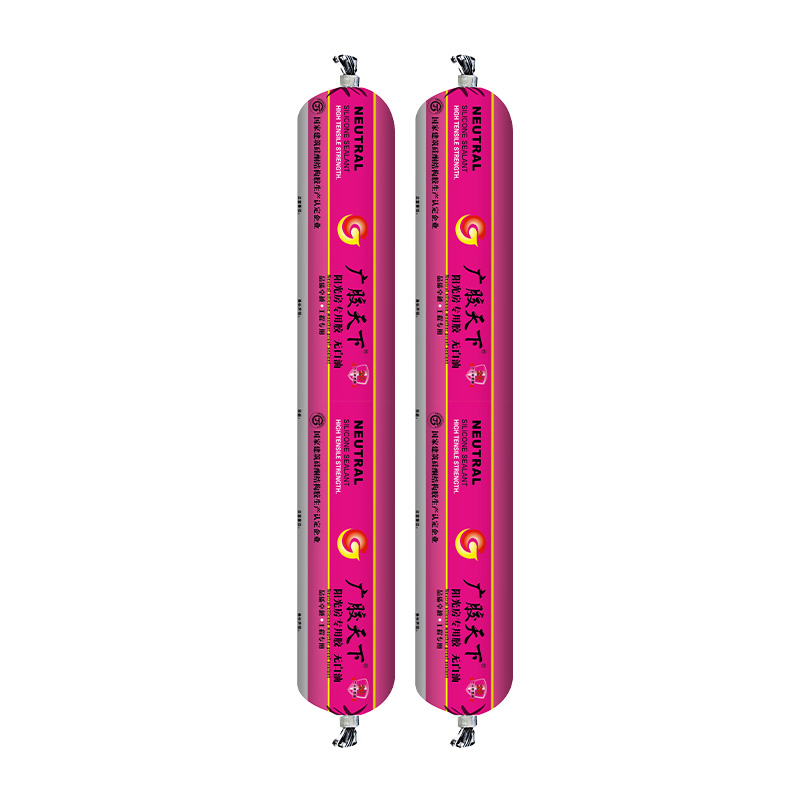
In high-humidity spaces such as bathrooms, kitchens, and laundry rooms, mold growth is a common secondary failure after the sealant ages. An anti-mildew formulation reduces that risk significantly over the service life of the joint. The Guangjiao 998 neutral silicone anti-mildew sealant is formulated specifically for damp indoor environments where microbial activity is harder to control.
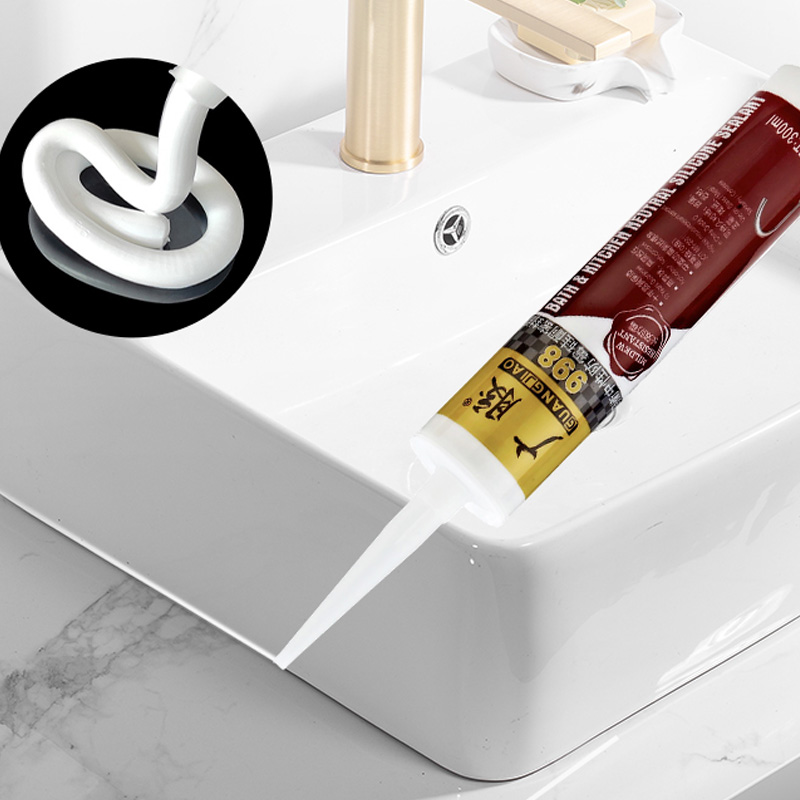 Neutral silicone anti-mildew sealant for damp indoor jointsFormulated for humid spaces, this neutral-curing sealant resists mold growth and adheres well to most building materials, making it suitable for kitchens, bathrooms, and sanitary ware.View Product →
Expired silicone does not lose just a small margin of performance. In our quality-control tests, aged product can show a 50% drop in tensile adhesive strength compared with fresh sealant. Elongation, or the ability to stretch under movement, deteriorates even faster, which leads to cracking and peeling within the first year of service. Buyers who use an old tube to save a few dollars often end up paying for removal, surface preparation, and a full reseal.
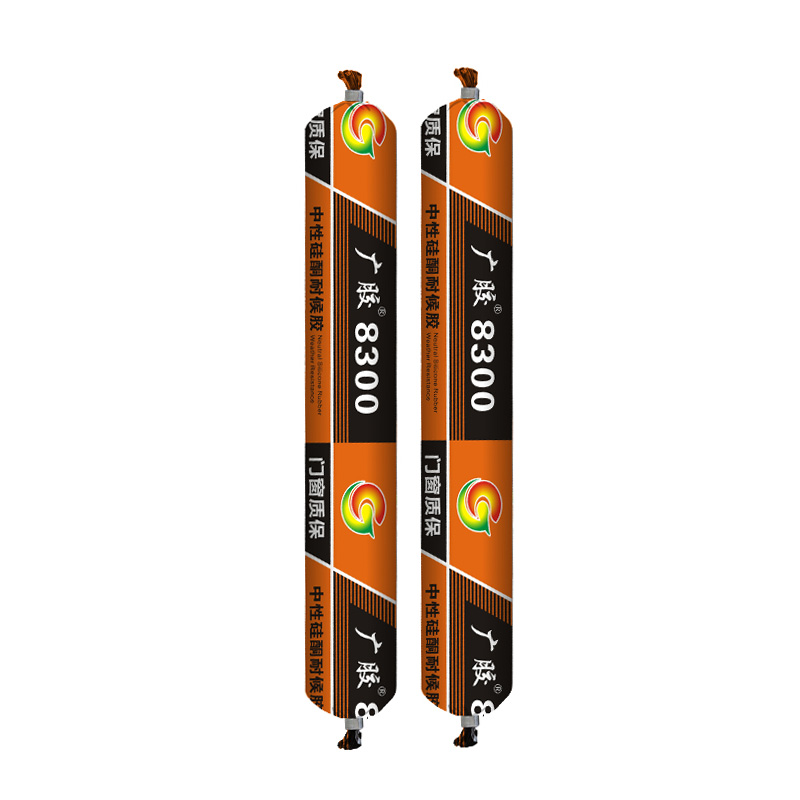
Unless you are filling a purely cosmetic gap that will be covered with paint, using expired silicone in a structural or weatherproofing joint is a false economy. For exterior facades and other long-term exposure, always choose a product with a clear production date and documented warranty, such as the 791 neutral silicone weatherproof sealant designed for professional facade joints.
 General-purpose neutral silicone weatherproof sealant for building jointsA versatile neutral-cure sealant with good extrudability and sag resistance, ideal for sealing doors, windows, expansion joints, and ceramic tiles, preventing air and moisture infiltration.View Product →
Three dominant factors determine how quickly silicone caulk degrades in storage: temperature, humidity, and ultraviolet exposure. Understanding these variables helps you plan purchases and manage inventory more effectively.
Temperature swings are especially harmful. Repeated cycles of heat and cold create micro-expansion and contraction inside the tube, which can pull in fresh moisture every time the air pressure changes. That is why a tube stored in an uninsulated garage can fail faster than a tube stored in a heated warehouse.
Proper storage can make the difference between a tube that works after 14 months and one that hardens after 6. The following habits are easy to implement and require no special equipment.
On job sites, inventory control is just as important as the product itself. If you are managing a construction project that requires a faster-curing material to shorten the cycle, the 995 fast-cure neutral silicone construction sealant is a practical choice, but it also needs a clean and cool storage environment to preserve its performance under warranty. To avoid accidental use of an expired product, mark every tube with the date it entered the site storage area and use a first-in, first-out approach.
 Fast-curing neutral silicone construction sealant for quick project turnaroundThis one-component sealant cures rapidly to high strength, reducing waiting time. It bonds to various substrates and withstands weather and movement, supporting efficient assembly.View Product →
Under normal storage conditions, an unopened tube lasts 12-18 months from the production date. Most manufacturers print 12 months as a conservative guarantee, and some neutral-cure formulas remain functional beyond 18 months.
We recommend against it. Even if the tube looks normal, the bonding strength and elasticity have already declined. Reapplying a second sealant over a failed joint costs more in labor and materials than starting fresh with a new tube.
The 15-20 minute skin test is the most direct method. Apply a small bead and wait. If an elastic skin forms on the surface, the curing chemistry is still alive. If the surface stays wet or tacky, discard the product.
Yes. Once the seal is broken, the sealant is exposed to air and moisture, which accelerates the curing reaction. Properly resealed tubes should be used within 1-3 months for neutral-cure formulas and within 2-4 weeks for acetoxy formulas.
Do not use it for any sealing job. Cure it in a well-ventilated area, then dispose of it according to your local waste management rules. Never pour uncured silicone down the drain, because it will clog pipes and cause environmental damage.
Buy only the quantity you need for the current phase of the project. If you must store a larger stock, rotate the inventory and check production dates at the time of delivery. A reliable supplier will always print the production date clearly and provide a warranty period.
For project teams, planning the application method is the final step toward a long service life. If you need a refresher on the correct process, our guide on how to apply, cure, and work with silicone sealants walks through the key steps from surface preparation to final inspection.
Subscribe to our newsletter
Product
Quick Links
contact Us
No. 9, 2nd Road, Huicheling Industrial Park, Heping Town, Changxing County, Huzhou City, Zhejiang Province, China
+86-572-6550355
+86-17769681106


 English
 Français
 Español